
It’s been almost six months since we started publishing the Bulletin! And today, we wanted to do a pulse check. We’d really appreciate it if you could take 2 minutes and answer this short survey on what has been working and how we can improve. Here’s to the next six months, and thank you so, so much for reading and for being part of our community.

News digest
It’s been an excellent two weeks for Mauritian cyclists: Kim Le Court won Stage 6 of the Tour de France Femmes, and has performed wonderfully so far in the Tour of Britain that ends this Sunday. 18-year-old Tristan Hardy won the Tour de La Réunion on 9 August; he's the only the fourth Mauritian ever to do so, and the first since Christopher Lagane in 2018.
An important story unfolded last week. The first thing that you should know is that two brilliant, internationally-recognised ophthalmologists are Mauritian – and from the same family: Professor Patrick Yu-Wai-Man holds the Chair of Ophthalmology at Cambridge; his sister, Dr Cynthia Yu-Wai-Man, is an Associate Professor at King's College London and a consultant at St Thomas' Hospital. Both returned to Mauritius to help set up screening programmes for glaucoma and diabetes-related eye disease, drawing on colleagues in Cambridge, London and the Singapore National Eye Centre. They also brought ten micro-implants, worth around £1,000 each, donated for Mauritian glaucoma patients. They were left in administrative limbo for weeks if not months by the Ministry of Health. The Prime Minister then met the pair on 10 August and made public his irritation with the way they were treated, saying that civil servants who don't want to work should take their retirement and stop blocking the country's progress; the Government Information Services page then stated that the government intends to collaborate with Patrick and Cynthia Yu-Wai-Man on a variety of programmes. What we’re hoping to see – in line with what was announced in the Budget – is a transformation (if not outright streamlining) of the ways in which diaspora members are able to contribute to their country.
A 600kg young elephant seal has been dozing around Port Louis since 4 August. Rather than pushing him back to the lagoon, the Ministry of Agro-Industry, Food Security, Blue Economy and Fisheries – along with coastguards, the ports authority, vets, the Mauritian Wildlife Foundation, Eco-Sud and the Marine Megafauna Conservation Organisation – has set up rotating patrols: they’re going to observe and protect him as he moults. Officials have named him Jackie.
A truly remarkable moment dominated headlines last week: Shakeel Mohamed, in a form-fitting t-shirt and cap (styled backwards), strode around Pointe d’Esny on 13 August to assess the many ways in which bungalow owners and renters have attempted to privatise the beach. Public officers were eviscerated for their lack of action; clap-backs were doled out to bungalow owners who attempted to talk to the Minister; the owners have been given fourteen days to clear the myriad structures impeding public access. Mohamed’s outing in Pointe d’Esny comes a month after he stated, in parliament, that he was recently asked “what are you doing around my home?” while on the beach in the North of the island. Unfortunately for him, though, his efforts have been somewhat tarnished by reports that, allegedly, his own apartment in a complex in Bain Boeuf may not respect laws concerning the ‘high water mark’ (which states, in essence, that no edifice can be built 30 metres from the shore at high tide).
Kersley Chowrimootoo's Enn Devwar Memwar, his poetry collection written in Mauritian Kreol, won the Prix de l'Encouragement du Jury in the Creole-language category at the fourth Prix International de l'Invention Poétique at the Festival Mai Poésie in Martinique. It was also launched at the IFM on 6 August. Kersley teaches Kreol at primary level, chaired the Union of Kreol Language Primary Educators, and is writing a dissertation on the poetics of decolonisation in Césaire's Cahier d’un retour au pays natal.
In awful news, the Mauritius Digital Promotion Agency has stated that there were over 1.2 million attempts made by Mauritian internet users in 2025 to access websites containing child sexual abuse material. As horrific as these statistics may be, they are now a published fact, which should hopefully spur state action.
Lastly, 15 years after the Truth and Justice Commission report was published, a joint committee of the Commission diocésaine pour la cause Créole and Justice et Paix will collect testimonials in Port-Louis North and Black River on discrimination in hiring and promotion, and submit recommendations to the authorities. Me Désiré Dian says racism is a “phénomène de société” and points to the fact that the UN committee on racial discrimination has repeatedly flagged gaps in Mauritian law and discrimination against Creoles, including those from Rodrigues and Agalega.

Diaspora spotlight
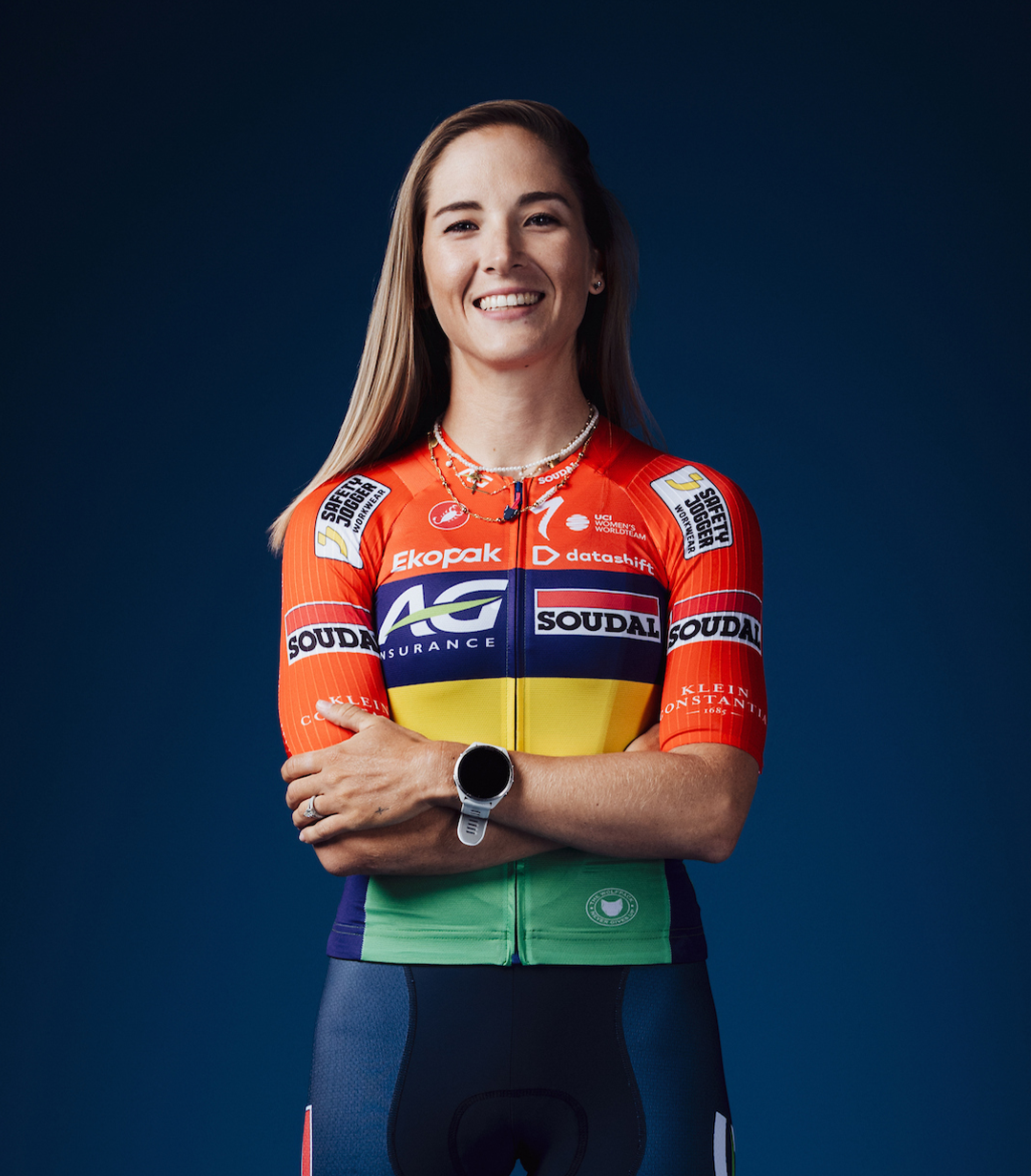
We had the honour of talking to the icon that is Kim Le Court last week, for our first-ever Live Diaspora Spotlight. She was such a pleasure to interview: unafraid of vulnerability, devoid of ego, her talent is matched with a truly great sense of humour and – incredible for someone so young (she’s turned thirty this year) – proper wisdom.
We want to take you to August 5. It’s almost midnight in France, the night before Stage 6 of the Tour de France Femmes, and Kim Le Court-Pienaar is still awake. She knew this season was going to be tough: she crashed at Milan-San Remo in March, crashed again at Flanders in April, had a fractured wrist and wasn’t on her bike for ten weeks. The Tour de France Femmes isn’t going as she wished. Her team's plan for tomorrow is sensible: sit in the bunch, recover, wait for a better day. She picks up her phone and messages her directrice sportive saying I want to win tomorrow.
What follows is the kind of day that can only be described as epic. Kim has a mechanical on the second-to-last descent and needs to change her bike; she chases back to the peloton, then bridges across to the breakaway, and in Tournon-sur-Rhône she wins the sprint from a group of eight. It's her second Tour de France stage win in two years. 'I just woke up that morning with so much hunger and so much anger at the same time,' she says. 'I just wanted to give the team something.'
We spoke to Kim a few days after the Tour from her European base in Girona. There were fifty Mauritians (and some friends of Mauritius) on the call, scattered across the world, some of whom had been waving flags at French roadsides the week before. She said that the other riders were surprised by how vocal, and how present, her Mauritian fans were.
During the Live Spotlight, some of these fans wanted to know what it takes to succeed as a professional athlete. 'I see life as a really long tunnel, and most of the time it's dark,' she says. 'There are going to be zigzags. You're not going to see the light for a long time. You might see it at one point, but it might disappear. But there's always light at the end. It might be around the next corner — you might go around five corners and it's still dark, but it might be the sixth one' she says, by way of advice to young athletes. Advice we can, and should, all live by.
Kim was born in Curepipe in 1996 to a family that moved constantly with her father's work. There were lean years – at one point, as per this article, the family of four squeezed into a single room at her grandmother's flat – and years of adventure, such as when she lived in Madagascar near a river filled with crocodiles. At three years old, she was placed in an induced coma in France after contracting malaria; her doctors gave her a one-in-ten chance of survival and told her parents to bring her brother in to say goodbye. A last-chance injection saved her. Her one memory of the recovery ward is of pedalling a bicycle up and down the corridor, drip still in her arm.
She idolised her older brother Olivier, and copied his sporting adventures through tennis, golf, rugby and eventually onto a bike, after their parents borrowed bicycles to ride the 100km Cycle Challenge as a dare with friends. Football, in fact, was the first sport in which she showed serious skill: she talked her way onto a boys-only club at six, was good enough to be offered an American college scholarship at fourteen, and turned it down because she didn’t want to be alone and so far away. Olivier was the one who understood that Mauritian cyclists should try to leave the country in order to up their game. 'The sport is under-developed in Mauritius, unfortunately. You need to be surrounded by people that believe you can go the next mile.' Her parents, she says plainly, sacrificed everything they had for years.
Her first attempt at Europe looks, on paper, like a dream beginning: signed by a British team at nineteen, based in Belgium, racing the professional calendar in 2015 and 2016. Living in Europe at the time, though, was financially very difficult. ‘I gave up. Back then I thought that if it’s not working out now then I probably just won’t have a career – which is clearly, in retrospect, not true.’ She fractured multiple ribs during a heavy crash on the second day of the 2016 Giro d'Italia, and returned to South Africa shortly afterwards. From 2016 to 2023, she coached young athletes and worked as a bike fitter for seven years. She raced mountain bikes for love rather than obligation, and slowly her passion for the sport returned. In 2023, she and her friend Vera Looser won the Cape Epic, the eight-day South African challenge often called mountain biking's Tour de France, through a week of mud, rain and mechanicals.
She was ready to be back on track, but she didn’t have confidence that she would be signed and didn’t reach out to anyone. It was her soon-to-be husband, Ian Pienaar, who wrote to the professional teams on her behalf: 'you just need that one person in your surroundings that believes in you more than you believe in yourself,' she says. Most teams declined or asked for data she didn't have. Only AG Insurance–Soudal showed real interest, and a week before her wedding, the team's manager called to offer her a contract. She arrived at her first training camp still recovering from a broken sacrum, promising to be the best domestique (a rider who sacrifices their own personal success and energy to support their leader) the team had ever had.
She was not a domestique for long. Within months she had ridden to tenth at Paris–Roubaix on debut, and in July 2024 she won a stage of the Giro d'Italia. The race that had quite literally broken her in 2016 was now the scene of her first professional victory, and the first Grand Tour stage ever won by an African woman.
In 2025 came a season that rewrote what a Mauritian athlete is allowed to imagine. In April she won Liège–Bastogne–Liège, one of cycling's five Monuments – the first cyclist from Africa, man or woman, ever to win one. At that July's Tour de France Femmes she won Stage 5 into Guéret, holding off Demi Vollering by a wheel, and wore the yellow jersey for four days — again a first for the continent — before giving up her own overall chances to ride for a teammate in the mountains.
She only learned she'd made history at Liège after the race was over. 'I never allowed myself to dream this big,' she says. 'I never thought I would be in the position to have the opportunity. It was always: it's impossible, I'm from Mauritius, things like that don't happen to us.'
Which is what makes this year's Stage 6 win so spectacular: it was not the culmination of a charmed run, but came at the end of what was possibly her hardest season so far. Barely recovered from her wrist fracture in June, she flew home for a single week and won both national titles. ‘Back home, it’s a rebooting. It’s eating dhall puri and mine bwi and feeling relaxed. I made it clear to the team that it was very important for me to go back to my roots, even if it was for one week. I just need to see my parents, my husband, my brother, the animals. I need to go to the beach, and wake up and hear the birds.’
This year she redesigned her champion's jersey around the full Mauritian flag head to toe. 'We sat down and decided, let's do something crazy. The bigger the better, for me, in terms of representing the country.' On the morning of the final stage, a Mauritian family brought a small boy to the team bus for a photo. She crouched down to lift him onto her lap; instead he ran straight into her arms and hugged her. 'This is why we do it,' she says. 'That's Mauritians giving me back the love.’
When asked about what it would take for Mauritius to produce the next Kim, she sets infrastructure issues aside and focuses instead on mentality. 'People don't see themselves as being capable of achieving their dreams— and I speak like that because I was there. There was no-one drawing a path for us athletes, showing us what can be done. And that’s the biggest problem. There are a few athletes like me, or better than me, in Mauritius; it’s just about finding that support system to take them to the next level. There needs to be an infrastructure of mental preparation before you can build bigger things.'
The barrier is not the size of the island; it is the size of the dream. Kim spent years unable to imagine the career she now has. Her verdict on those years is the one she'd give her 15-year-old self, and any Mauritian walking their own dark tunnel: 'When I was my young teammates' age, I was coming last at every single race. I thought I'd never be a good cyclist. Ten years down the line, I am now one of the best cyclists in the world. Your day will come. You just have to carry on pushing.'
'I wish I could put everyone that supports me in Mauritius in one stadium, and I wish I had big arms, and I could hug everyone,’ she told us. We couldn't give her a stadium, but we did give her, for an hour, a community of fifty of you from around the world.

To our community: since we launched Bridge Moris, we have often been approached with enquiries about whether we are hiring, and we are so pleased to finally be able to say YES!
Bridge Moris is looking for a third person to join our small but mighty team – specifically, a Talent Manager.
As you may have guessed, we’re expanding our operations. Since launching in late 2025, we’ve worked towards bringing the diaspora together by creating the Bridge Bulletin you're reading right now; hosting a steady programme of in-person and virtual community events, and advocating for the diaspora in matters such as the right to vote, and participating in efforts around the development of the National Diaspora Policy for the Mauritian government.
In September 2026, Bridge Moris will launch its flagship offering: its Diaspora Talent Platform. We can’t reveal everything quite yet – you’ll have to wait a few more weeks! – but in essence, our Talent Manager will support diaspora members ready to come home full time and place them into senior roles with our partners in Mauritius.
Come work with us!
📍 Mauritius based, remote flexibility for the right candidate
🌍 Diaspora applicants warmly encouraged
📅 Start: October–November 2026
⏰ Deadline: 18 September 2026
🟢 Learn more and apply here.

Bridge playlist
Originally, we’d planned on sharing Anne Ga’s Gete kot nou ete – a hymn to Mauritian athletes and their incredible sporting achievements. Unfortunately the official video isn't out yet on YouTube, so we thought we’d share her single Lor Dilo instead; a gorgeous tribute to the sea.
Kreol crossword puzzle

P.S.1: ‘Ena palto, pena kalson?’ or, what has a jacket but no trousers? Yeah, the answer’s icky: a cockroach. See you in two weeks!
P.S.2: Know somebody who is missing Moris? Forward this publication to them, and spread the mauricianisme!