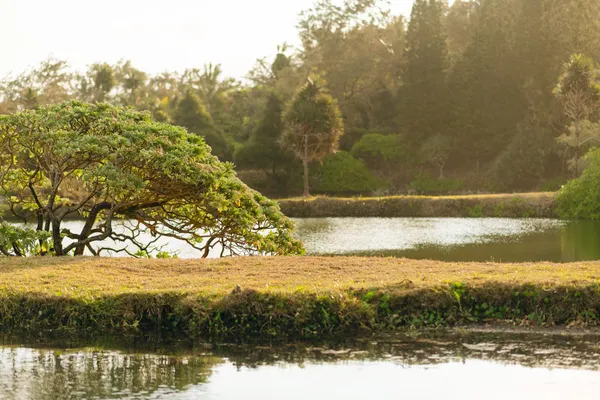
We never set out to write ‘thematic’ issues, but this Bulletin’s content has us thinking a lot about our rasinn – our blood lines, our language, our environment. Roots to grow into, roots to preserve, roots that are the bedrock of a more sustainable tomorrow.

News digest
A bastion and advocate of our Kreol language died at the end of September. Professor Vinesh Hookoomsing taught linguistics at the University of Mauritius, became its Pro-Vice-Chancellor and directed its Language Institute before retiring in 2008. In 2004, he led the government's work on a harmonised orthography for Kreol Morisien, which produced Grafi Larmoni – an instrumental text that allowed for the standardised teaching of Kreol in classrooms.
Mare aux Vacoas’s water reserves, currently at 35.9%, are expected to hit around 20% by the end of this November. If rain doesn’t arrive in the next few weeks, the CWA has announced that the reservoir will no longer be able to supply water to the districts of Plaines Wilhems, Moka and parts of Riviere Noire. The government plans to ‘deploy’ (their own verb - we’re not sure if that means using existing boreholes or digging new ones) ten boreholes in order to mitigate the crisis, which seems to be escalating. On the night of 7 October, protests broke out in Saint Paul, Allée Brillant and Highlands, with people taking to the streets in anger at the fact that they haven’t received any running water flowing through their taps in days.
The NHDC — the National Housing Development Company, the state company that has been building and selling subsidised housing estates since the 1990s — is about to hand over its first keys under the Rent-to-Own scheme. The scheme was launched by Shakeel Mohamed, the Minister of Housing and Lands, in November 2025. Around forty applications have been validated so far, and the first households are expected to move in within weeks. The scheme is designed for people who are facing considerable difficulties in acquiring a home: to qualify, one must already have been turned down twice (once by a commercial bank, and again by the NHDC's own in-house mortgage facility, which is a loan the company offers when a bank refuses to do so). These are families whose income is real but too small or too irregular for a lender to price. Single mothers have absolute priority, alongside elderly applicants and pensioners. Rent is Rs 4,000 a month for five years. After that time, the NHDC will re-examine each dossier, and if the applicant has become eligible for a mortgage from the NHDC or MauBank in the meantime, up to 80% of the rent already paid is credited against the purchase price. If the applicant’s circumstances remain largely unchanged, the agreement can run on for another five years.
At La Mivoie, Rivière Noire, the district council has approved 69 building permits that would see the construction of 24 villas, 45 apartments and penthouses, plus a shop, gym and outdoor bar. Another round of approved permits covers two tennis courts, two padel courts and a clubhouse with a restaurant. Residents in La Mivoie say that the area can’t sustain such massive real estate projects: the land is a floodplain. Previous projects have hindered land drainage, and three neighbouring plots of land were refused conversion in 2023 to allow for construction because of the flooding risk. On top of it all, no Environmental Impact Assessment certificate was granted to the project, and there are contradictory reports as to whether clearance was granted (with the Minister of Environment saying none was given). Residents are preparing to ask the Supreme Court to review the permits that were given by the District Council.
Also in Riviere Noire, activist and music producer Percy Yip Tong, along with another citizen, chained themselves to a banyan tree on 8 October to protect it from being felled. An old banyan tree a few feet away had been butchered on 7 October. Percy Yip Tong has since been arrested by police and will be spending the night in prison. The real estate promoter (who apparently had the required licence to fell the tree from the Forestry Department) has stated that it would preserve what was left of the tree. Banyan trees are an introduced species to Mauritius, and aren’t protected by Mauritian law in the same way endemic species are. Mauritius has no tree preservation order, unlike Seychelles and Botswana, who have one in their planning acts: such an order would protect flora on both public and private land.
The price of petrol has spiked yet again, a 10% increase that is directly being attributed to the war in the Middle East. Renewable sources account for just 9.3% of Mauritius’ total primary energy requirement (and roughly 17% to 20% of its electricity generation).
And lastly: it may not be a ‘newsworthy’ item as such but Air Mauritius is bouncing back in terms of customer service. For all of you who have booked flights home in the next few months, know that passengers are demonstrably happier with the quality of service in general. As reported in Le Weekend newspaper on 4 October, Air Mauritius’ technical reliability now stands at 98.72%, complaints are down 38.1% year-on-year, punctuality is up from 72.4% to 78%, and there’s a climb from 63rd to 52nd in the Skytrax rankings. And, as reported by Alex’s dad, the food is remarkably better, too.

Mauritius on the move
This isn’t particularly flashy news, the sort that is shared many times over, but it is actually really important. We’re making strides in public transportation – news that is of particular interest given the sheer number of road accidents this year, and also the rising price of petrol.
The Ministry of Land Transport says the National Transport Corporation is now running 106 electric buses, with four more each at Rose Hill Transport and Triolet Bus Service. A Bus Modernisation Scheme offers grants of up to Rs 3.5 million towards replacing old fleet, and a $5.6 million project with UNDP and the Global Environment Facility is funding the next stage of public transport transformation. By 2030, no bus in Mauritius will be allowed to be older than sixteen years. Plus, we can expect a public transport penalty points system, graduated licensing for new drivers, GPS tracking on buses and cashless ticketing.
Public transport greatly matters in a country where, for generations, buses haven’t been reliable (or perfectly safe, for that matter). Modern, dependable, electric-run buses would lead to less congestion on the roads and – crucially – to more people opting for buses instead of motorcycles. Roughly one in two of those dead on Mauritian roads this year were on a motorbike; 117 people have been killed in road accidents this year as of the time of writing.
Diaspora spotlight

We want to thank Ameerah Arjanee for telling us that a Senior Vice President of television development at Miramax – one of the biggest film and television producers in the world – is Mauritian. Truly, there’s no way we would have known otherwise (readers: when you’re sitting on information like this, let us know!)
Mirsada Dassani was a teenager when she first read Ally Carter’s Gallagher Girls book series – the young adult spy-adventure novels were a major critical and commercial success – and last year, she won the books’ television rights. Also on her desk: series adaptations of Ella Enchanted and of Chocolat with Cynthia Erivo. Her career has spanned from Mumbai to New York to Los Angeles. This August, Mirsada was named one of Variety’s Hollywood New Leaders.
Culture corner
Nearly four million records of enslaved people across twenty former British colonies have been digitised, free for everyone to search. You’ll find 422,366 records of enslaved people who lived in Mauritius among them.Running from 1812 to 1840, these colonial slave registers were compiled in the colonies and sent to London to register human beings as property: recording names, ages, family ties, physical descriptions, and often the specific region in Africa or Madagascar from where a person was abducted. They are searchable now at ancestry.com/c/colonial-enslavement with a free account.
In Mauritius, this global digital release directly supercharges the ongoing work at the Nelson Mandela Centre for African Culture (NMCAC) in La Tour Koenig. Since 2011, the Centre’s Slave Genealogy Project has helped descendants bridge a critical historical gap created during emancipation in 1835, when newly freed individuals —who previously possessed no recognised surnames — were assigned family names in civil status registers.
Historians at the Centre’s Family History Unit usually relied on microfilmed registers repatriated from London in 1996, manually scrolling through reels to trace an ancestor. The Ancestry database dramatically changes this workflow in ways you should know about:
Cross-Border Tracking: A searchable index allows researchers to track individuals across Mauritius, Rodrigues, Seychelles, and Madagascar; particularly important when tracing family patterns in Mauritius, given our history of inter-island migration.
Superior Visual Clarity: The high-resolution scans taken directly from the original Kew ledgers are often significantly clearer than decades-old microfilms, making faded entries and physical descriptions legible again – so if you’ve started researching your family, it’s a good idea to check whatever documentation you may have and compare it with the new uploads.
Democratised Access: Because enslaved people were sometimes moved between regional territories, Mauritians and diaspora families can perform initial searches at home for free, arriving at the NMCAC with precise volume and page numbers to jump straight into civil registration tracing.
Crucially, these human registers form one half of a single colonial balance sheet, linking directly to University College London’s Legacies of British Slavery database. The triennial returns now on Ancestry were the exact census used by the British government following the Slavery Abolition Act to verify human ‘property’ and calculate payouts.
Where Ancestry catalogues the enslaved, UCL’s database (founded by historian Professor Catherine Hall) catalogues the enslavers. It tracks the £20 million in compensation (worth over £2 billion today) paid out to roughly 46,000 plantation owners, absentee landlords, and institutions for the loss of their ‘property.’ Read together, these two digital archives allow researchers to draw a direct line from an enslaved ancestor on a Mauritian estate to the specific owner.

The Development Enterprise Network relaunched last month, and is asking Mauritians on the island and throughout the world to help work out which reforms are worth fighting for. Two consultations go out through DEN's app over the coming fortnight: the first is on public service, and the second is on democracy and public accountability. The questions are available in English, French and Kreol, and are well worth your time.

Sirandann
Mo ena enn bann lasiet; zot bon tonbe, zame zot kase?, or, I have plates; they fall but they never break. What are they? Fey lor pie. Leaves on a tree. Did you guess right?
The Bridge playlist
Racinetatane was the musical group formed by Kaya in the early 1980s. The band is famous for inventing and popularizing seggae, a music genre that fuses traditional Mauritian séga rhythms with Jamaican reggae. Their 1991 album La Paix Universelle is available to listen in full here.
Kreol crossword puzzle

P.S. Know somebody who is missing Moris? Forward this publication to them, and spread the mauricianisme!