Bonzour zot tou! In these times, we’re in need of radical hope, collective action, and reimagining what we could be. This means looking at where we’re at now – looking in a way that is unfiltered – and coming together as a community.
Our first Lab that we hosted last week was, for us, one more small step in that direction. Diaspora members the world over – including Japan, at 3am! – joined us for two hours to think about what contributing to Mauritius could be like for them, whether they’re based abroad or thinking about returning to the island. We ended the session feeling immensely grateful for our community’s trust, and will be sharing some of the insights that emerged in the coming weeks.

News digest
A significant amount of information has circulated online over the past week about the sit-in of Malina Cheeneebash outside the National Assembly and the arrest that followed. Accounts differ across sources, and several claims have been repeated widely without attribution. We are giving more space than usual to this piece of news so that readers have the sequence in one place, with sources attached.
Malina Cheeneebash, 33, is a graduate of Queen Elizabeth College who studied in the United States on a scholarship. She worked in New York City as a research and advocacy assistant and in San Francisco as a UX design consultant, returning to Mauritius during the pandemic. She spent three years at the MCB before moving to freelance work. She has been involved in grassroots activist movements and trade union organisations both abroad and in Mauritius, including Rezistans ek Alternativ.
From Tuesday 28 to Friday 31 July, Cheeneebash occupied a tent near the House of Parliament with her dog, in protest against the pension reform. She was interviewed by journalists during this period. In one recorded statement, she said her interest was in collective action rather than in being turned into a focal point. She was joined at the site by trade union members and other members of the public opposed to the reform.
On Friday 31 July, the Finance Bill was passed. Sydney Pierre, Junior Minister of Tourism, was the only member of parliament to vote against it. He was subsequently removed from his position by the Prime Minister.
The sit-in continued after the vote. On Saturday 1 August, Cheeneebash was filmed criticising trade union leadership over the decision to organise a march rather than expand the sit-in.
On Sunday 2 August, police violently arrested Cheeneebash, stating ‘obstruction of footpath’; footage of the arrest has circulated widely. It has been reported that she is being held in a hospital, and she hasn’t been heard of or seen in public since Sunday. Rastafari artists and others have since occupied the sit-in site in front of parliament.
In other news:
Rémi Feuillet, 33 years old, won gold in judo at the Commonwealth Games, beating Canada’s Guillaume Gaulin in the under 90 kg final. His win gave Mauritius its second Commonwealth gold medal ever, and the first since Richard Sunee in 1998.
Véronique Leu Govind has been asked by the Prime Minister to step down as Junior Minister for Arts and Culture, after her husband Gulshan was arrested on a provisional charge for conspiracy to import roughly 156 kg of cannabis from Réunion, valued at around Rs 234 million. Gulshan Govind had already been arrested for drug possession in 2008.
After Sydney Pierre was revoked, the government appointed Anabelle Savabaddy as Junior Minister for Tourism, Tony Apollon as Junior Minister for Sports, and Karen Foo Kune-Bacha as Junior Minister for the Environment. As an aside, it’s worth pointing out that Pierre has extensive experience in the hospitality industry. Before her career in politics, Savabaddy was a very popular radio show host pre-2024; Apollon made a name for himself in social work, particularly active within the fishing community of Mahebourg, and Karen Foo Kune-Bacha was one of the island’s most famous athletes.
On 6 August, Joe Lesjongard stepped down as Leader of the Opposition. The Front Militan Progresis has put forward Chetan Baboolall's name for the position.
A centenarian Makak tree (known also as Grande Natte) was found near Trou aux Cerfs by a group of environmental volunteers – by accident. The species used to be endangered, and has slowly but surely made its way back to a healthy number over the years.
On 28 July, the SBM Holdings board announced that, following an internal investigation, it had decided to initiate disciplinary proceedings against Group CEO Raoul Gufflet and suspend him with immediate effect. Gufflet had spent 17 years with the MCB, and is credited with the Bank’s continental expansion; he left in 2020 against a background of disagreements with management, before joining SBM in 2021. There, he commanded an extraordinary salary – Rs 43 million for 2025-2026 according to this article.
A number of journalists were targeted with death threats by some MSM sympathisers during Pravind Jugnauth’s audition at the Financial Crimes Commission on 27 July; Jugnauth was interrogated as part of the investigation into the awarding of a 30 billion MUR contract to the Mercantile and Maritime Group while he was Prime Minister. For all the coverage the incident received, it seemed to do nothing to deter the thousands of people who attended the MSM rally two days later in Flacq.
And finally, but importantly: the National Human Rights Commission published a position paper on 3 August finding that the Civil Status Office's refusal to solemnise marriages between people of the same sex rests on no identifiable legal basis and is unconstitutional. The Commission recommends an interministerial committee, and says that if the state takes no legislative or administrative action, couples should be able to take the refusal to the Supreme Court. It also asks for gender clinics in every major hospital and a national committee on legal recognition for transgender people. The position paper is a recommendation, not a ruling, but we’re hopeful for an appropriate – positive! – governmental response.

Mauritius on the move
We enjoy receiving the Charles Telfair Centre’s newsletter – a great source of information on research, publications and conferences undertaken by Mauritian academics. Last month’s issue gave us more details on a closed-door discussion held in March under the theme of Advancing a Sustainable Tourism Economy in the WIO: The Mauritius Case. It brought together twenty senior figures from the public and private sectors around one table to name what is actually blocking progress on sustainable tourism in Mauritius.
Here are some of the interesting analyses that the panelists came up with:
– Better integrating local communities and small & medium enterprises is key to ensuring the longevity of the tourism sector. Small enterprises are left out of climate adaptation strategies because they don’t have the finances required to pivot to more sustainable practices.
– Re-envisioning our national tourism strategy to cater to the ultra-rich (following advice from the World Bank to target ‘higher spending per visitor’ rather than attracting more tourists), won’t curtail tourism’s harmful effects on the environment and may exacerbate economic inequalities already present on the island. As the academics write in the paper, ‘Mauritius should therefore redefine ‘high-value’ not as high-cost luxury, but as a high-yield experiential travel that minimises environmental footprints while maximising direct spend in the local economy.’
– Sustainable inland tourism initiatives should be promoted, which would reduce pressure on vulnerable coastal zones and strengthen the industry’s resilience through spatial diversification. The panelists also agreed that there should be no more hotel developments on our coasts.
– Investing in the restoration of cultural tangible and intangible heritage beyond listed historical sites is also crucial in re-imagining a more sustainable, inclusive, decolonial tourism industry. Take for instance the fact that at least 25% of tourists leave their resorts/lodgings to visit Port Louis at least once during their stay; how extraordinary would it be if they had access to the cultural and historical tours of Mauritius offered by MyMoris, for instance (a brilliant enterprise, dealt an irrevocable blow by the Covid-19 pandemic).
In the Budget this year, the Prime Minister laid out measures that were in keeping with the panelists’ assessment of the state of tourism: Mauritius is to allocate Rs 1 billion to a ‘tourism policy transformation’, Rs 490 million of which goes to the MTPA. The stated ambition is to move beyond 'sea, sun and sand': greater emphasis on nature-based, cultural, wellness and community tourism; eco-integrated tourism villages across different regions showcasing local cuisine, handicrafts, agriculture and heritage – all in all, an explicit push to get visitors inland and to spend time within local communities. Rs 4 billion will be given to a Coastal Erosion Adaptation Programme, which is to rehabilitate more than 11.5 kilometres of severely eroded shoreline across 17 priority sites over five years, complemented by nature-based solutions (reforestation, wetland conservation, dune restoration, coastal vegetation). We’ll be watching closely for developments.
Diaspora spotlight
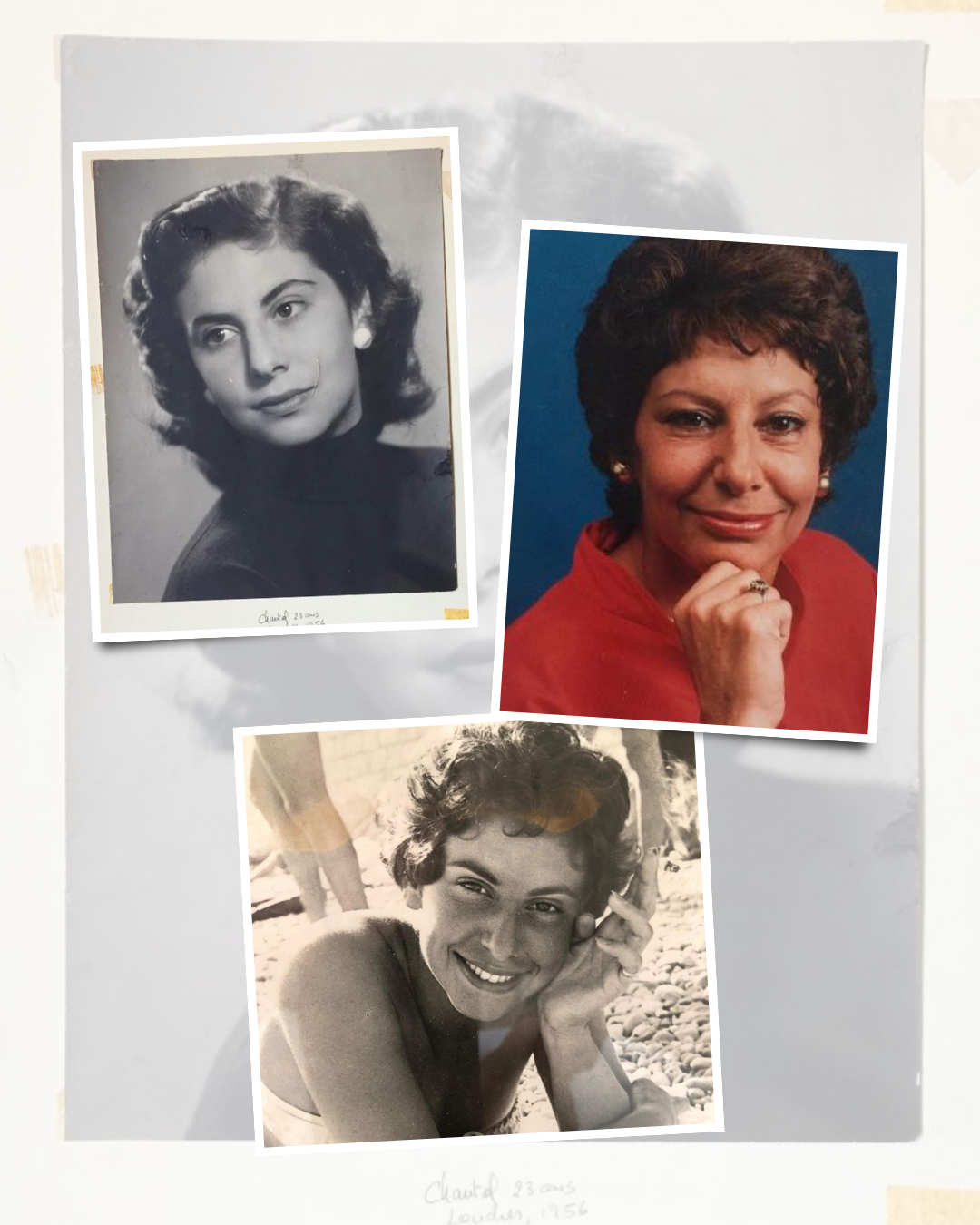
Our spotlight this week is someone who is no longer with us, but who had a remarkable life that we’d like to highlight. There’s very little written about Chantal Mompoullan in Mauritian newspapers, though she was one of the most prominent Mauritian figures to work in radio and to have a truly international career. We’re grateful to her daughter, Isabelle de Melo, for sharing her story with us.
Chantal was born in Curepipe in 1933, the only child of Edgar Mompoullan and Luce Riss. She attended Loreto Convent Curepipe, and was educated by the Irish nuns there at the time. Her position in conservative Mauritian society may not have been secure, however: her mother was Jewish and had been divorced, before marrying into the very Catholic family of Chantal’s father. Such a situation did not sit easily with the Catholic society of the day. Plus, she aspired to be an actress, which was not considered acceptable for a woman of her standing. This didn’t stop her from acting in a number of amateur productions (kudos to her).
Instead of the stage, she found her true place in front of a microphone. Chantal was eighteen years old when she joined the Mauritius Broadcasting Service (known as Radio Maurice back then), run out of the attic of the Curepipe town hall in the era of Marguerite "Mimi" Labat (the iconic first speakerine). Three years later, the BBC French Service offered Chantal a job in London; she left Mauritius and stayed seven years in the capital, mingling with the ‘50s Mauritian crowd in the city. There, she met a German student at Oxford, and married him in 1961.
Chantal had three children and spent the next fifteen years travelling around the world with her family: Germany as from 1962, where she did some work for Deutsche Welle (Germany’s public international broadcaster); Ethiopia as from 1966, Tanzania in 1969, and the United States as from 1973. In 1975 she worked at France-Amérique, the historic French-language weekly of the United States, before leaving the paper to join Voice of America's French service in Washington in 1978. She stayed at Voice of America and later World Net for over 25 years; it was from those stations that Mauritians would hear her voice again, thousands of miles away, on shortwave.
An article in the New Zealand Listener in 1957 suggests that Chantal was quite popular: described as a ‘vivacious young lady’, the newspaper states that British scientists and support staff wintering in the Antarctic specifically requested to hear more of her voice. She was more than a pretty voice, of course – her intellect clearly matched her vocal talent. She interviewed the likes of Maya Angelou, Betty Friedan, Grace Hopper and Helen Thomas, and the transcripts of those interviews were collected in a book published by the USIA in 1984, called Voice of America: Interviews with Eight American Women of Achievement. She also brought Mauritius to an American audience, interviewing Sir Gaëtan Duval and Vishnu Lutchmeenaraidoo on trade, debt and Indian Ocean politics. Both recordings are held today at the Library of Congress.
Locally, Chantal was written about by Alain Gordon Gentil and was interviewed by Finlay Salesse, and her last recorded work was a homecoming. In 2017 she narrated Mystic Mauritius, the nature documentary by Damien and Alexis Dittberner — the sons of her Mauritian friend in Washington, Ghislaine Dittberner — in English and in French. She gave her voice to the island she had left. Upon her death in 2019, she was buried in the family vault at the Cimetière de l'Ouest, Les Salines, Port Louis; a fitting resting place, on land but so close to the sea.
Culture corner
Mo pase la rivyer Tanier is one of those songs most, if not all, Mauritians know – sung to babies, probably sung to you. There are a few different versions of the song, but the one we know best is also one of the most unsettling pieces of Mauritian music in existence. Its notes aren’t comforting at all – they’re elegiac – and the lyrics tell of an old woman encountered by a riverbank, fishing, her life worn down by hardship.
It has been recorded by around twenty artists, with dramatically different iterations: take the upbeat versions of Micheline Virhassamy and Rosemay Nelson, for instance, and compare them to segatier Serge Lebrasse’s soft, mournful version here. The song crossed the ocean when the New Zealand-born French folk singer Graeme Allwright (best known for translating Leonard Cohen and Bob Dylan into French) performed it at a Paris charity concert in 1999.
But do you know where the song comes from? It was apparently composed by Fery Kletzer (1830-1878), a Hungarian cellist and a serious Romantic-era musician who toured extensively through Europe, who somehow ended up visiting Mauritius and La Réunion in his short life. What he seems to have done with this piece of music is take Mozart’s Ah, vous dirai-je, Maman (most of us know the notes as ‘Twinkle Twinkle Little Star’) and upend it: sorrow permeates the piece instead of joy, its sprightly rhythm transmuted into something slower, more powerful. And la riviere Tanier is, as you may have guessed, the Latanier river.

From a small island that has little in the way of an established, professional cycling tradition, to the yellow jersey at the Tour de France Femmes: Kim Le Court-Pienaar is the first Mauritian, man or woman, to race to the very top of professional cycling.
In 2025, she became the first African woman to win one of the sport's five Monuments. Months later she led the Tour de France Femmes in the yellow jersey and won a stage outright, another first for the continent. She achieved all of this years after thinking she was no longer at the peak of her abilities.
Kim is representing Mauritius at the Tour de France Femmes this month, and on Friday August 14th, we are bringing her to Bridge Moris community for our first ever Live Diaspora Spotlight: a live conversation about the long road to athletic stardom, what it costs to chase something this big from far away, and what it means to carry Mauritius with you wherever you find yourself.
This one is for every Mauritian who lives far from home and still feels the island in them.
📅 Friday August 14th, 2026
🕐 11am EDT | 5pm CEST | 7pm Mauritius
💻 Free to join, live on Zoom
🔗 Register at bridge.mu/kim

Sirandann
From Arnaud Carpooran’s Proverb ek Sirandann Repiblik Moris, riddle us this:
– Ena palto, pena kalson?, or, what has a jacket but no trousers?
Hint: it’s something that probably grosses you out.
The Bridge playlist
Malina Cheeneebash’s arrest has had the effect of an earthquake among our Mauritian friends here and abroad; she’s about our age, she seems to have become a symbol of all the hopes of a better nation that our generation fights so hard for. On social media, we’ve seen stories of our friends remembering the arrests and detention of other prominent figures – Kaya comes back, again and again. He would have been considered ‘young’ at the time of his murder, when he was 38 years old.
Kreol crossword puzzle

P.S. Know somebody who is missing Moris? Forward this publication to them, and spread the mauricianisme!