
Today, you’ll be reading issue 14 of our regular Bridge Bulletin. You can tell the difference in your inbox by the emojis we add to each title: Mauritian flag for the Bulletin, dodo for our Contributions newsletter covering our Diaspora Talent Platform.
We wanted to thank you all so, so much for the wave of support across social media following the launch of our Diaspora Talent Platform. We’ve received excellent coverage from places like Business Magazine and Investor’s Mag; make sure to also check out Yashna’s segment in TopFM’s Zoom Extra programme, where she talked about the platform, diaspora contribution to the country, and our collaboration with the Development Enterprise Network, a think tank newly revived by Ali Mansoor. There’s lots more to come, so stay tuned.
Beyond our Platform, we’ll be keeping our eyes on Kim Le Court this Saturday as she races for the rainbow jersey in the 180.4km elite women's road race in Montreal.

News digest
There’s a lot to cover, so here’s a recap of what’s been happening in Mauritius over the fortnight:
Donald Trump has said, once again, that the Chagos agreement is a ‘terrible’ deal. Speaking to The Guardian, British officials have said they believe that the ‘deal’ – the transfer of sovereignty from the UK to Mauritius – will be ‘on hold for as long as Donald Trump objects to it [...] with no immediate signs it can be adapted to suit the US president.’
In our last Bulletin we talked about two Mauritian diaspora members, Professor Patrick Yu-Wai-Man (Chair of Ophthalmology at Cambridge) and his sister Dr Cynthia Yu-Wai-Man (Associate Professor at King's College London and a consultant at St Thomas' Hospital – read her latest profile in l’express here), who met with the Prime Minister in order to discuss the establishment of screening programmes for glaucoma and diabetes-related eye disease in Mauritius. We’re delighted to see that the Prime Minister has also warmly received Professor Edward Lam Shang Leen (Emeritus Professor of Radiology at Imperial College London) last week, to discuss a collaboration that would see the provision of interventional radiology and interventional oncology services in Mauritius.
Beyond the PMO, there’s a definite diaspora vibe that we’re happy to see across the internet. On June 25, Hans Lowtoo launched The Kestrel Diaries on YouTube; on July 15, Estelle Desvaux de Marigny created a YouTube video series called Morisien Laba, and on September 11, Jean-Joseph Permal, a veteran reporter on Mauritian tourism, launched a website showcasing Mauritian diaspora members who have had international careers in hospitality. The Mauritian chapter of the United Nations' International Organization for Migration is also treating this September as the Diaspora Month 2026, highlighting the tremendous resource that the diaspora is to the country. We hope that this renewed energy contributes to stronger, more productive links between Mauritius and its global community.
Mauritius is gearing up for the creation of its National Crime Agency (NCA), which will take shape through no fewer than nine bills. The NCA will replace the Financial Crimes Commission, which is to be abolished outright — as will the Financial Crimes Commission Act, which, as you'll recall, gave the Commission greater powers than the Director of Public Prosecutions. The bills are now published, and the agency they describe is considerably more than a renamed FCC: the NCA becomes the lead investigative body for financial crime, cybercrime and other serious, complex and organised crime, with the power to take over an investigation from the police. An Inter-Agency Coordination Board will sit above the machinery, bringing together the NCA, the DPP, the police, the MRA, the Bank of Mauritius, the FSC, the Gambling Regulatory Authority and the Financial Intelligence Unit. The Criminal Justice (Offenders Assisting Investigations and Prosecutions) Bill introduces, for the first time in Mauritian law, a framework for granting immunity from prosecution or a reduced sentence to someone who helps investigators. The bills go before the National Assembly when Parliament reconvenes on 20 October. The timing seems well-judged: a preparatory mission from the Eastern and Southern Africa Anti-Money Laundering Group, the regional anti-money-laundering body, arrives on 14 December, ahead of the full evaluation of Mauritius's financial-crime regime in 2027.
Shakeel Mohamed has continued his tour along the Mauritian coast, this time walking extensively through Tamarin and Rivière Noire. Brand new public access signs have been put up, but even more excitingly: Mohamed’s Ministry is creating an interactive map showing where public beach accesses are to be found in Mauritius. There are more updates to come for the rest of the island, but you’ll find that a lot of the main passages for Tamarin have been marked on the map. As this good article by l’express notes, the map is a foundational first step: the other, more difficult steps to come involve remaking and rehabilitating the accesses.
We all know of the plague of pesticides and herbicides in Mauritius. In February 2026, the 'Guidelines on Best Practices for Roadside Weed Management using Herbicides in Mauritius' were published by the Ministry of Environment; fast-forward to late August, and the Municipality of Vacoas-Phoenix has announced that it will no longer be using glyphosate for roadside weed control. We hope all the other Municipalities will follow suit soon.

Diaspora spotlight
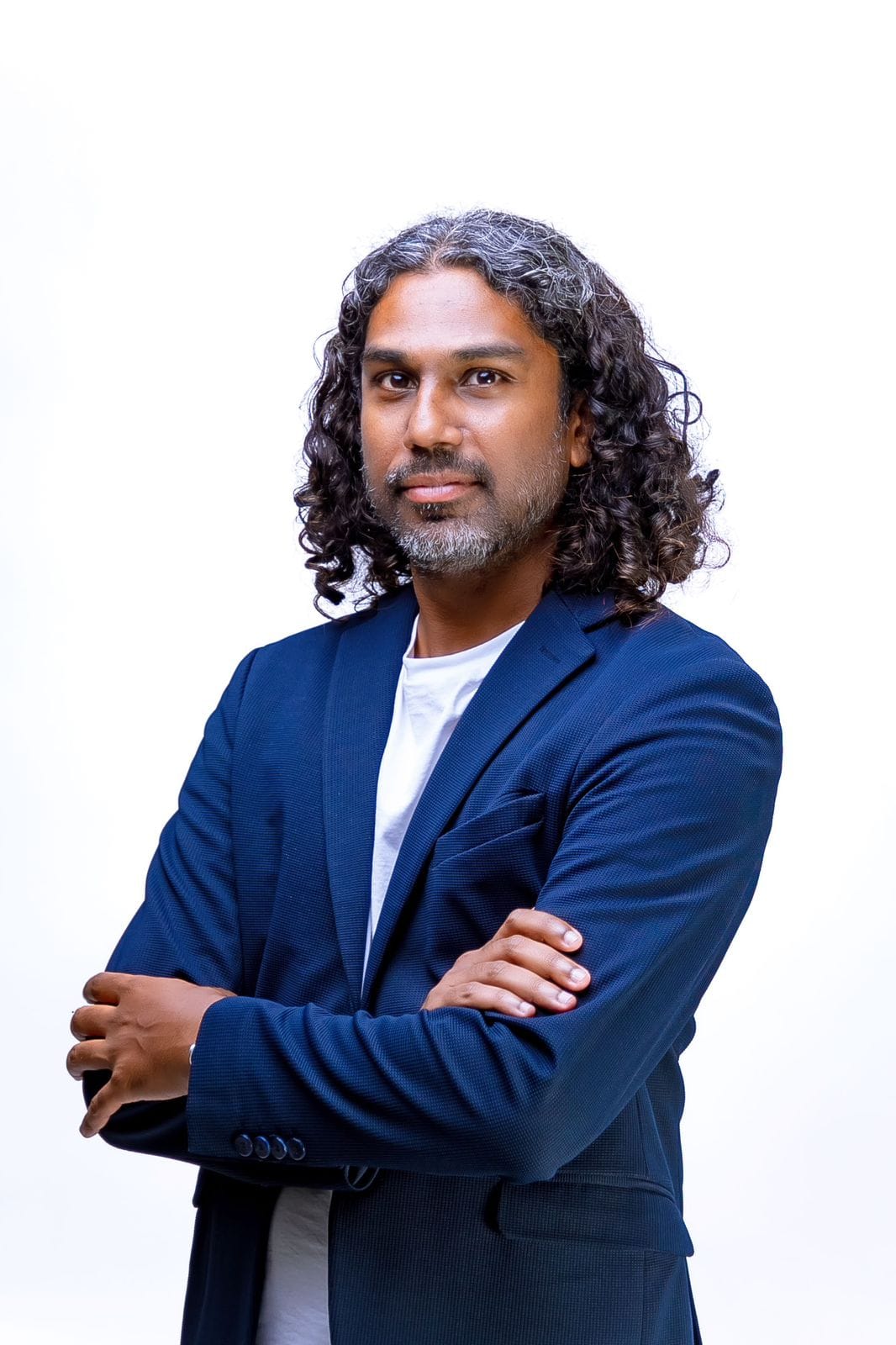
Veda Sunassee grew up in St Julien d'Hotman and attended Royal College Port Louis before going to Princeton University, where he arrived to study engineering and left in 2010 with a degree in Political Science and Political Economy. A Princeton in Africa fellowship took him to the African Leadership Academy, a pre-university residential high school near Johannesburg in 2010; in 2015 he joined Fred Swaniker's founding team for the African Leadership College in Mauritius — Swaniker is the Ghanaian serial entrepreneur behind the African Leadership Group, and the College is the inaugural campus of the African Leadership University (ALU) on the island. Veda then moved to Kigali in 2017 as founding Dean of the Rwanda campus, and a year later was named to the inaugural cohort of Obama Foundation Leaders: Africa programme, which connects and supports regional cohorts of changemakers. After a sabbatical, during which he co-founded the leadership and education consultancy NiaDelta, he returned to Mauritius in 2021 to lead both ALU campuses, becoming CEO the following year and stepping down in early 2026 after fifteen years with the African Leadership Group. He currently lives in Mauritius, and is the second returned diaspora spotlight that we’ve featured in the Bulletin so far (you’ve asked for more of these, and we’re here to serve).
In his fortieth year of life, and after fifteen years with the African Leadership Group – four of them as Chief Executive Officer of its University in Mauritius – Veda Sunassee resigned. He has not moved on to another job. He is on sabbatical, in Mauritius, working out what the second half of his life could look like.
He has been on sabbatical twice before. The second time it happened was just before the pandemic, when he explored consultancy and theatre before returning to the African Leadership Group in 2021 until 2026. The first time is a story worth telling in more than just a few lines: in his sophomore year at Princeton University, Veda’s family went through a turbulent time; Veda eventually took a leave of absence and came home for a few months. Exhausted by the physical and emotional turmoil of the period, he bought a bike and started cycling around the island. 'That was the first time ever that I could really spend time with my thoughts – and own it. I didn't have anything to account to my parents, I didn't have school or anything else to worry about. Just me and my thoughts! What do you do? You listen. Even if you don't want to,’ he told us over coffee (his gift for speech is apparent, as you will see; we do hope that a new play is in the works).
None of the distance he has travelled – geographically, socio-economically and emotionally – is necessarily obvious from where he sits now. Veda grew up in a social housing project in St Julien d'Hotman, where his parents kept a chicken farm and where he played football in the street with a tennis ball. What carried him out of the village was a sequence of people who decided to bet on him; what he did with the fifteen years that followed was help build the machinery to make that same bet on other people, at scale, across a continent.
Veda was a good student, even as a young child. His father transferred him to a school in Providence, so that Veda would have a better education. After school he’d have tuition, and would come home as dusk fell. More travelling was on the way for him, as he was admitted to Royal College Port Louis (RCPL) for secondary school – an hour away by bus. He was undeterred, however, because he liked learning, though he hated the ruthlessness of the competitive system.
‘Even as from Form 1, attending RCPL was super intimidating. The fathers of some of my classmates were on television, and I was a village boy. I didn’t have big ambitions but I didn’t want to fail. At the end of my school year, my class mistress told me that I had come second, and that I would have come first if my grade average had been better; I thought to myself, if I can be second among these guys, then maybe I have something going on. And that’s how I grew in confidence.’ That confidence led him to believe that perhaps he’d be able to win a scholarship, and be able to leave Mauritius. ‘And at that point, I wouldn’t settle for anything less than getting out.’ He had a friend who was four years older than him, a scholarship-winner who was the third Mauritian student to have ever gone to Princeton. His friend set the bar, and although Veda didn’t become a laureate, Princeton awarded him a full scholarship.
By the time Veda was immersed in university, though, he had an existential crisis. He had achieved his dream; he was in the engineering program. ‘I just sat on the bed and was like, what the fuck am I doing here. Now what? You think you’ve reached the finish line. Turns out it’s actually the starting line. It was brutal.’ Given Princeton’s Liberal Arts education model, along with his required engineering modules, he delved a little into the humanities – and loved all of his classes. ‘I realised that science didn’t really move me, and that I was still thirsty for knowledge; there was so much I didn’t know about the world. I also realised that I was, fundamentally, too much of a social person.’ Then came family turmoil and the return to Mauritius. On his way back to America, with his thoughts and spirit in good shape, he stopped in Ireland to see his father. ‘I told him that from now on I was an independent person; that I’d call him if I needed advice, but that these were my goals, my choices, my life. It completely redefined our relationship. The boundaries were set.’
Veda switched out of engineering after returning to the U.S, and completed his degree in Political Science and Political Economy pretty much from scratch in his third year. A conversation with a friend turned him towards social entrepreneurship, and he found his way to Ashoka, the American organisation that has spent five decades identifying and funding social entrepreneurs around the world. He spent a summer at its head office in Washington DC. ‘That internship set the trajectory for the second half of my life. I joined a community with people who were thinking about shifting society through grassroots movements and social innovation; I was blown away. I felt that this was my tribe and community.’ After graduating, he sought social entrepreneurship programmes that weren’t so focused on America, applied to another fellowship called Princeton in Africa, and was matched with the African Leadership Academy (ALA).
He very nearly said no. What changed his mind was William Kamkwamba.
‘Do you know who William Kamkwamba is?’ Veda asked us. ‘In college, every morning, I’d watch The Daily Show,’ — the American satirical news programme, then hosted by Jon Stewart — ‘and Kamkwamba was one of the guests. When he was 14, he picked up an engineering book in his village’s library and built a windmill to power his home. A CNN journalist interviewed him and he went viral. I thought, that’s a social entrepreneur. The next day, I was on a call with the African Leadership Academy, ready to decline their offer because I thought I was so done with education and its institutions. The guy on the other end of the line was hyping me up. He said, we have some amazing students, one of them is William Kamkwamba, he’s gone to Dartmouth. And in that very moment I just knew I was destined to join the Academy. The original plan was to spend just a year there, to understand who I am, as a Mauritian with an Indian heritage but whose country was deemed to be part of Africa. So it was supposed to be a year on the African continent, then one year in India.’ He never left the continent.
What he found there was a cause he could give his life to – the same one that had somehow shaped his own life: taking a bet on young people. 'It was never about being in the education sector,' he said. 'It's about how to continue innovating. We did education differently. ALU doesn't do exams, it's all project-based learning. So many of our students have gone on to do brilliant things. Our team was so deliberate, finding our students from all over the continent, developing their abilities, letting them thrive.’
We told him that a decade-plus across both institutions shows real commitment, and he answered by listing the people who had made him. 'You know, I wouldn't be where I am today if someone didn't take a chance on me. My teachers, ever since nursery – the ones who told my parents to put me in a better school. The 90-year-old who said he wanted to sponsor a kid from Africa before he died – the sponsorship I received to attend Princeton.’
Given his regional expertise, we thought it would be fitting to ask Veda about what he thinks about the state of the continent – if that’s ever a question that could be answered. ‘I think there are a lot of reasons to be optimistic. No-one’s letting themselves be bullied by Europe and America anymore. They can’t force themselves into emerging markets. There’s a stronger leadership emerging as older politicians die out, and technology is catalysing incredible change. There are so many risks, though: it doesn’t cost the West anything to just incentivise war – case in point: what’s currently happening in the Middle East. I think bigger geopolitical conflicts could impact the continent, and Mauritius.’
And what of Mauritius, specifically? ‘The potential has always been there, but we’ve gotten complacent. We’ve lost a lot of talent. Almost two years into a new government and we haven’t seen anything new. What happened to all those great ideas, to the bold promises? But we, as a country, have gifts that others wished they had. We have an amazing location, we don’t have porous borders, we’re economically and politically stable. Businesses have trusted us for a long time, so it’s in our interests to continue being attractive to them; we need to make our country one that radically promotes innovation and entrepreneurship and thereby attract some of the best entrepreneurs from across the world. There’s a lot of stuff that we should do, and that includes getting first and second-generation Mauritians of the diaspora to come back.’
We got to talking about how many of our conglomerates are now broadening their operations and are breaking into the African market, collaborating with entrepreneurs, changemakers and businesses across the continent. And though these efforts are often lauded, when Africans come to Mauritius seeking better opportunities whether through education or employment, they are often treated with the vilest kind of disrespect. Testimonials abound, from students to workers alike, about the racism dark-skinned Africans face in Mauritius. ‘I find, very often, that Mauritians are offended at the idea that we could be racist. There’s so much institutionalised racism here, and we’ve sanitised our history. To understand how institutionalised racism works, and to get to a place of understanding, you have to go to a deeper place of thinking and talking. And in our context – in our education system – we don’t do that talking. That’s where the hard work lies.’
We left the conversation thinking about how much of a life can turn on somebody deciding you are worth the risk; how much life can broaden out, too, in magnitude, once you take risks on yourself – once you are prepared to slow down, think, delve into who you are and re-emerge anew.

Sirandann
From Arnaud Carpooran’s Proverb ek Sirandann Repiblik Moris, riddle us this:
– Mo ena enn bann lasiet; zot bon tonbe, zame zot kase?
Or: I have plates; they fall but they never break. What are they?
You’ll find the answer in two weeks’ time!
Bridge Playlist
Manu Desroches was one of ten finalists for the Prix RFI Découvertes 2026, and is a singer and musician who should be well on your radar. We’re linking to his fantastic Chapter of Sound concert last year, which was crafted to launch his debut album.
Kreol crossword puzzle

P.S.: Know somebody who is missing Moris? Forward this publication to them, and spread the mauricianisme!