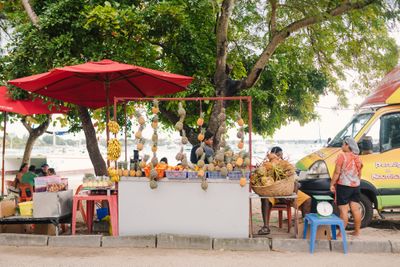
It’s raclette season for quite a few people in Mauritius, but in Alex’s (lactose- and nitrate-intolerant) opinion, nothing beats a good bowl of dumplings. If you’re in Mauritius, you obviously want to head down to Jim Snack in Port Louis; if you’re not on the island, or can’t make it to the capital, this recipe from Mauritian-Australian superstar chef Brendan Pang hits all the right spots: a glorious salsa to pair with store-bought boulettes.

News digest
We're dedicating this Bulletin’s news digest to the Budget, given how much it has dominated local news cycles.
Less than one working day after the budget was read out in parliament, the Prime Minister announced that the government would freeze some of its plans to reform the pension system. The reform caused a massive outcry over the weekend, with radio stations and social media awash with people expressing their anger and fear at the proposed changes, which would see pensions slashed for those earning over Rs14,000 a month; a failed attempt, in essence, at the state's first stab at pension/income targeting.
This backlash has also raised contentious issues within the government. There are rumours that Shakeel Mohamed wanted to leave the government, after allegedly learning – like a good number of MPs – about the pension reform as the Prime Minister was reading it. More tangibly, a press conference was held by Ashok Subron (the Minister of Social Integration, Social Security and National Solidarity, of Rezistans ek Alternativ) on the 22nd of June; he declared that the Prime Minister was ‘misled by a group of unelected individuals’.
In much better budget news, however, the Prime Minister announced that maternity leave will be extended to twelve months, and paternity leave to six weeks. Women get fully-paid leave for the first six months (i.e. they’re paid their full salary), then are paid 50% of their salary for the remaining six months (which are optional). Neither the speech nor the Annex specifies a funding mechanism for the extension, so we still need to wait for the Workers' Rights Act amendment in order to know more about how the leave will be designed. We hope, crucially, that the new Act will protect women from potential discrimination and possibly retaliation by employers after it comes into effect.
For members of the diaspora, there are a few announced measures that could hold promise:
– The EDB is to set up a National E-Diaspora Platform to "harness diaspora expertise," with the Public Procurement Act amended so public bodies can directly engage qualified diaspora experts for specialised services.
– The establishment of a Visiting Doctor Scheme, which aims to bring international high-calibre consultants into public healthcare. Though this measure isn’t diaspora-only, it’d be ideal if it formally allowed medical practitioners of the diaspora to practise medicine in Mauritius without having to register with the medical council (a long and fraught process, as per many accounts).
– The government is welcoming start-ups with gusto: a dedicated Start-Up Act, an Accelerator at the EDB, a hub at the Côte d'Or Special Economic Zone (SEZ), a start-up labour framework, and a 10-year income tax holiday from day one of operations are all designed to attract entrepreneurs to Mauritius. The Côte d'Or SEZ offers 100% foreign ownership, tax/duty reliefs and a special data-centre electricity tariff, and manufacturers get a 45% investment tax credit including for AI solutions; for a diaspora founder in tech, fintech, AI or biotech, that's a real proposition: set up here, pay no income tax on the venture for a decade.

Diaspora spotlight
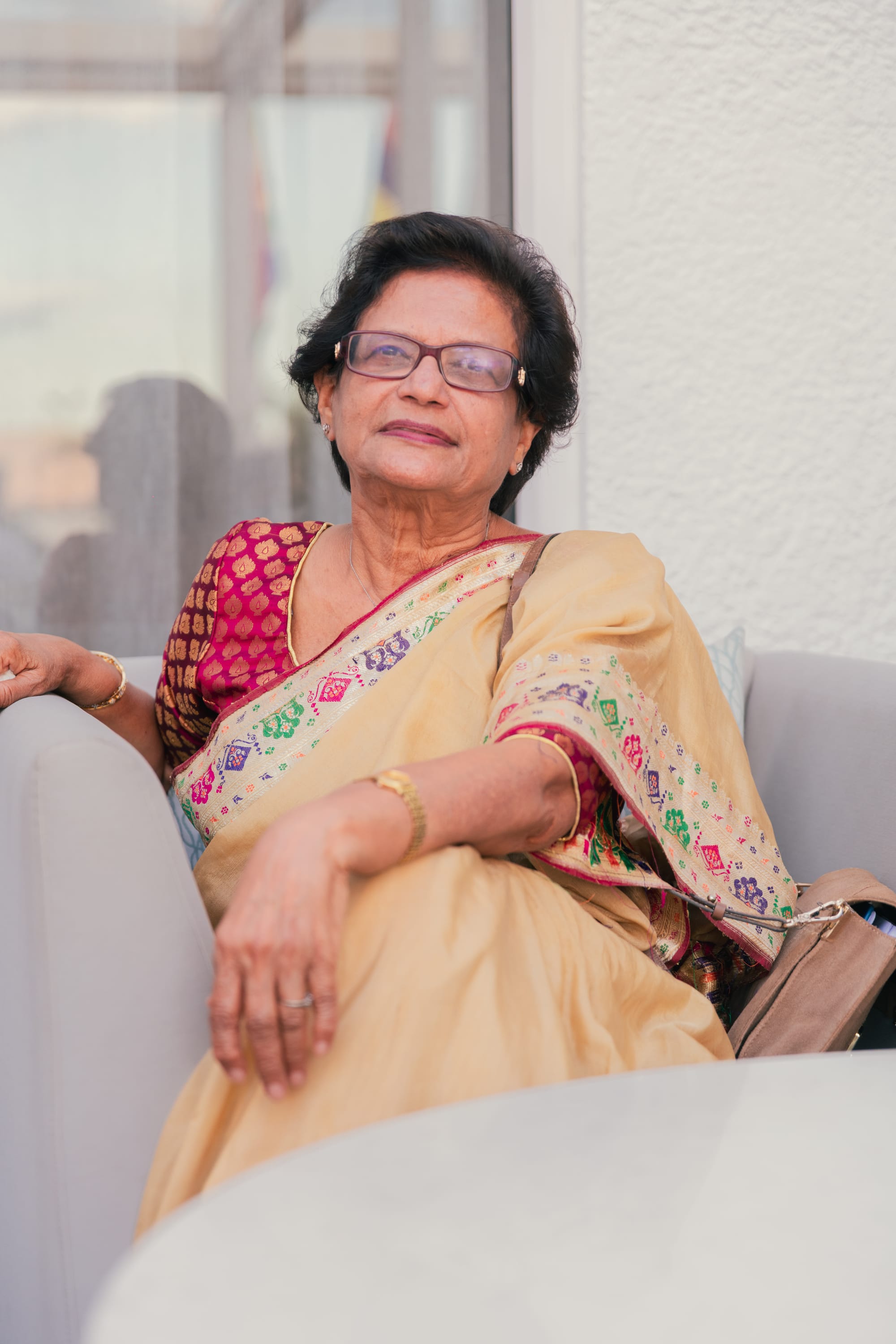
Devi Manraj, 77 years old, forged an incredible career for herself in statistics at a time when Mauritian women were expected to be housewives and little else. She began her career in Mauritius and later worked in countries across the East coast of Africa, spent a few years in Central Asia and ended her career in the Middle East. She is a member and fellow of the Institute of Statisticians, and has worked for the Mauritian Statistics Office and the International Monetary Fund, shaping the laws and best practices that we still use in Mauritius today.
This spotlight is longer than usual, but we wanted to honour her long, full, brilliant life.
Devi is the eldest of nine children. She attended Queen Elizabeth College and was first in her year in Mathematics; her academic prowess didn’t count in her own home, however. Her parents decided to prioritise her brothers’ education before her own. ‘For girls, there was no plan. And I did feel a sense of responsibility for all my siblings, so I did everything so that my brothers could go study. One went to study accounting, the other became an engineer.’ As she speaks about this she opens her palms, a resigned gesture without bitterness that encapsulates so much. ‘It was like that. No one thought about the girls.’
She was employed by the Bank of Mauritius in 1967 after secondary school, working under British officials and alongside Aunauth Beejadhur, who would become the Bank's first Mauritian governor. She was a senior clerk who took care of letters. When she got married in 1971, she learned, to her horror, that in her work contract it was stated that she couldn’t keep her job full-time as a married woman. She was able to continue to work part-time at the Bank as a temporary member of staff. The Bank changed the rules concerning married women’s employment a few years later. ‘Had I been able to stay on full-time, I would perhaps have been leading the Central Bank in the 90s,’ she says.
Her life, in fact, would involve a lot of career highs, travelling, moments of grace but also of devastation. But she didn’t know that at the time. What she did know, however, was that she’d married a good, forward-thinking man. ‘My husband, Balcurrun Manraj, deeply valued education; it was his priority, in fact, and he wanted me to be able to thrive.’ He was a clinical biochemist, the first specialist of his kind in Mauritius; he wanted her to continue studying for her exams at the Institute of Bankers despite her inability to maintain a full-time job at the bank. She passed the Institute’s exams in 1968, and subsequently passed the Institute of Statisticians’ exams a few years later.
‘Then my husband got a scholarship for a Master’s in Clinical Biochemistry to go to England, and as a good housewife I followed him to Newcastle.’ While he immersed himself even more in his lab work, she was contemplating her future. ‘I didn’t think I was going to have a career at that point. I had no children. I cooked, I ate, I waited for my husband to come home.’ When her husband completed his course, the couple returned to Mauritius and Devi became pregnant.
Three months after giving birth, the management of the Statistics Office Mauritius called her. ‘They told me that no one had passed the Institute of Statisticians’ exams except for me, and they were going to give me the Commonwealth scholarship so that I could study statistics at the Polytechnic of Central London, now called the University of Westminster. But I wasn’t going to leave the country with an infant. My husband told me to go, that he’d take care of our son. But I couldn’t do it. I refused the scholarship’.
The Statistics Office rang her again a year later, informing her that they still didn’t have a single successful candidate, and that the scholarship was still hers if she wanted it. ‘So at that point, my husband took a year’s leave from his job in Mauritius just so that I could study statistics at the London polytechnic. He was employed in a hospital, and I left my child at a daycare near the train station every day to study in central London.’
Devi had proven to be a brilliant student in her time in the UK, despite the challenges of being a young mother at university. ‘I returned to the island after a year, employed at the Central Statistical Office (now Statistics Mauritius). Upon the publication of results I got a promotion,’ she chuckles, remembering that upon the publication of the university’s results, she was made Senior Statistical Clerk in 1980. Soon after, her second child was born – a girl.
Her family life and career were on good track, before death stole into her life when she was just 36 years old. Her husband died very suddenly on the 26th of December. ‘He wasn’t sick. He said he felt tired after driving from Pointe aux Piments to Trou aux Biches, said he would rest, and he died on my lap on the way to the hospital.’ Devi was left to care for a 4 year old daughter and an 8 year old son. ‘I don’t know where my courage came from. I do have faith, and I think my faith carried me through. The responsibility of my whole family rested on my shoulders’.
Devi worked incredibly hard. By 1990, she was promoted to Senior Statistician at Statistics Mauritius. Her career continued to flourish and she became Deputy Director of the same institution in 2001. She was able to introduce new methods and best practices and even authored a publication on labour productivity and its assessment. Her expertise, we believe, turned her into a singular figure within the organisation and beyond; in 2000, she was requested to help the Ministry of Finance in the creation of the new Statistics Act.
Her children grew and then came the decision about their tertiary studies. She was keen to give both her son and daughter equal opportunities. Taking a loan, she managed to send both to study at the London School of Economics.
With her children all grown up, she was able to travel abroad more often for work. On a boat to Zanzibar, following a work trip in Dar-es-Salaam, she caught the eye of a director who worked for the International Monetary Fund (IMF). ‘I think they liked my questions at the conference,’ she laughs, saying that the director asked her outright, then and there, if she’d like to join the IMF. She worked for the IMF at Dar-es-Salaam for five years as a regional resident advisor, and then was posted to the IMF’s office in Tashkent in 2008 in the same role. ‘I was in Uzbekistan for my 60th birthday, with my children around me, and I thought I was going to retire soon.’
On the way back from Uzbekistan, she was invited by the IMF to give a speech at a workshop in Ankara. ‘I can’t even remember what I said. But someone from the Qatari government was there. In 2010, I got a phone call from Qatar from this person, who said they were very impressed with my speech. He wanted me to come for an interview in Doha.’ She wasn’t sure of the opportunity, and her son accompanied her. While meeting Qatari state officials, one of them asked how she was able to work across Africa – wasn’t she scared of malaria? ‘I said I wasn’t afraid of mosquitoes,’ Devi grinned. She was handed the contract for the job on the spot, and stayed in Doha for five years.
Devi must have cut an imposing figure then, just as she does now: she has rheumatoid arthritis, and her movements are painful, but she holds her head high, and spoke to us directly during the whole interview, face to face. The arthritis, she says, started in Doha; when she left Qatar, she returned to Mauritius and officially retired.
When we asked about the current state of the Statistics Office, she said that 'it's so important for state figures to be trusted, and to be trustworthy.' She was very glad that Mauritius became the first country in Africa to adhere to the IMF's Special Data Dissemination Standard Plus (SDDS Plus), the most rigorous tier of the IMF's statistical transparency framework.
As we waved goodbye to her, we felt this sense of duty carried forward. Devi came of age as a new nation was being born; she traced an incredible path for herself, forging ahead despite discrimination and personal tragedy.
When we first met Devi, she lit up hearing about what we were doing with Bridge Moris. ‘I love seeing women forging ahead,’ she told us. At the time, we received her warmth gratefully, without fully understanding its weight. Having now heard her story — the scholarship deferred for a newborn, the career interrupted by a contract clause, the widowhood at 36, the decades of relentless, discreet excellence — we understand it better. She spent her life carving a life that was never meant to be possible for her gender.

Bridge playlist
With the news of the budget, the public outcry, the testimonies of how difficult life is today, it was almost impossible not to think of Menwar’s iconic Pop Lekonomi, and its truly excellent video featuring people living life in 90s Port Louis.
Kreol crossword puzzle

P.S.1: Ti bolom, gran sapo? So, who is a small man with a large hat?
A mushroom, of course!
P.S.2: Know somebody who is missing Moris? Forward this publication to them, and spread the mauricianisme!