
Bonzur! Gardening in Mauritius – with its improbable rainfall patterns and high humidity – is not a straightforward affair; you really have to pay attention to things like soil composition, keep a wary eye out for root rot. One plant, though, that seems to shoot up and thrive wherever it is found, is brede mouroum – moringa. Just throw in a few leaves in any dhal or lentil soup you’re making, and you’ll have yourself an iron- and antioxidant-rich meal. In other cool news, recently-published research has found that moringa seeds are as effective as chemicals at removing microplastics from water (records of using the seeds as a water filtration method go back thousands of years).

News digest
Desalination is increasingly presented as the answer to Mauritius’s water insecurity, and a large solar-powered plant has now been proposed for the North. A year-long feasibility study is to determine the exact site, the financing model and the energy-efficiency measures: we’re hoping for details on what the plant is going to do with the amount of toxic brine produced from desalination, as well as assessments on the potential harm to marine life. Though it’s great news that the government is taking our water crisis seriously, we’d like to see if there are any near-immediate measures that could be implemented in 2026. This year’s El Niño season is set to break records, and we could see severe drought in Mauritius.
Blood, burnt cars, quad bikes, ‘Kala Samurai’ and a plethora of weapons are all part of an unhinged story that broke on the 17th of May. From what we gather, a group of villagers from Camp Thorel were upset with the owners of a chassée who’d come over for the weekend, and who were using their quad bikes on a public area of the property (on the ‘parcours de santé’, or fitness trail). The verbal dispute quickly turned extremely violent. Police officers who intervened were injured, their cars burnt. People involved in the fight were hospitalised. Arrests have been made and an investigation is ongoing: local social media was particularly incensed that ‘kala samurai’ – a young woman who appears to be handing someone a samurai sword – hasn’t been arrested or interrogated yet. The government has terminated the family’s lease of the chassée.
The incident in Camp Thorel, along with a number of other horrific crimes committed this month – such as the murder of Gino Bodha, Nando Bodha’s son, the probable murder of a man in Vacoas, and the attempted murder of a lawyer in Hermitage – has raised questions on what should be done to make the country safer. Shakeel Mohamed recently said that certain members of the police force should be able to carry weapons, but given the cases of police brutality (and deaths in police custody) that also occur in Mauritius year after year, arming the police may not be the wisest option. It's important to note, too, that Mauritius has one of the highest rates of police per capita in the world: roughly one officer for every hundred citizens.
Here are two better stories about our police force, though: over May, they helped with two births. In the first instance, two female police officers – Constables Bulluck-Kistoo and Gayadin – delivered a baby in a police vehicle because the SAMU had no ambulance available; the Constables were talked through each step by a doctor on the phone. In the second, officers reached a woman who had already given birth on a motorcycle in a street of Port Louis, and drove mother and newborn to hospital. It's worth noticing what made these stories happen: the lack of good quality, public medical infrastructure that would have allowed both women to access an ambulance quickly.
Nathacha Appanah was awarded le Choix Goncourt de l'île Maurice on the 22nd of May for her autofictional novel, La Nuit au Coeur. It’s a wonderful coming home moment, and one that broke a new record: Appanah won no less than 25 Choix Goncourt across the world since La Nuit au Coeur was published, the highest number to have ever been won by a single author.
The Global Organized Crime Index 2025 is an unsettling read on the local drug trade (among other facets of organised crime). The good news is that, compared to the rest of the world, our institutions are quite resilient at dealing with organised crime. The bad news is that Mauritius is a significant transit point for international drug networks, trafficking high-purity heroin with links to Madagascar, Afghanistan, and southern Africa. Law enforcement efforts are hampered by corruption, with police officers implicated in heroin trafficking. We’re also a global transit hub for synthetic drugs, with established links to international locations, including Hong Kong, China, Germany and the UAE.
To end on a much nicer note: a Mauritian couple have a cocoa plantation in Sebastopol! Gérard Cangy happened upon a Criollo variety of cacao by accident around 2001, while hunting deer and boar. For over twenty years, he learned how to take care of the plant and make it multiply. He cares for his plantation along with his wife Josiane, whom he met in 2016 (again, while out hunting). It’s a lovely read.

Diaspora spotlight
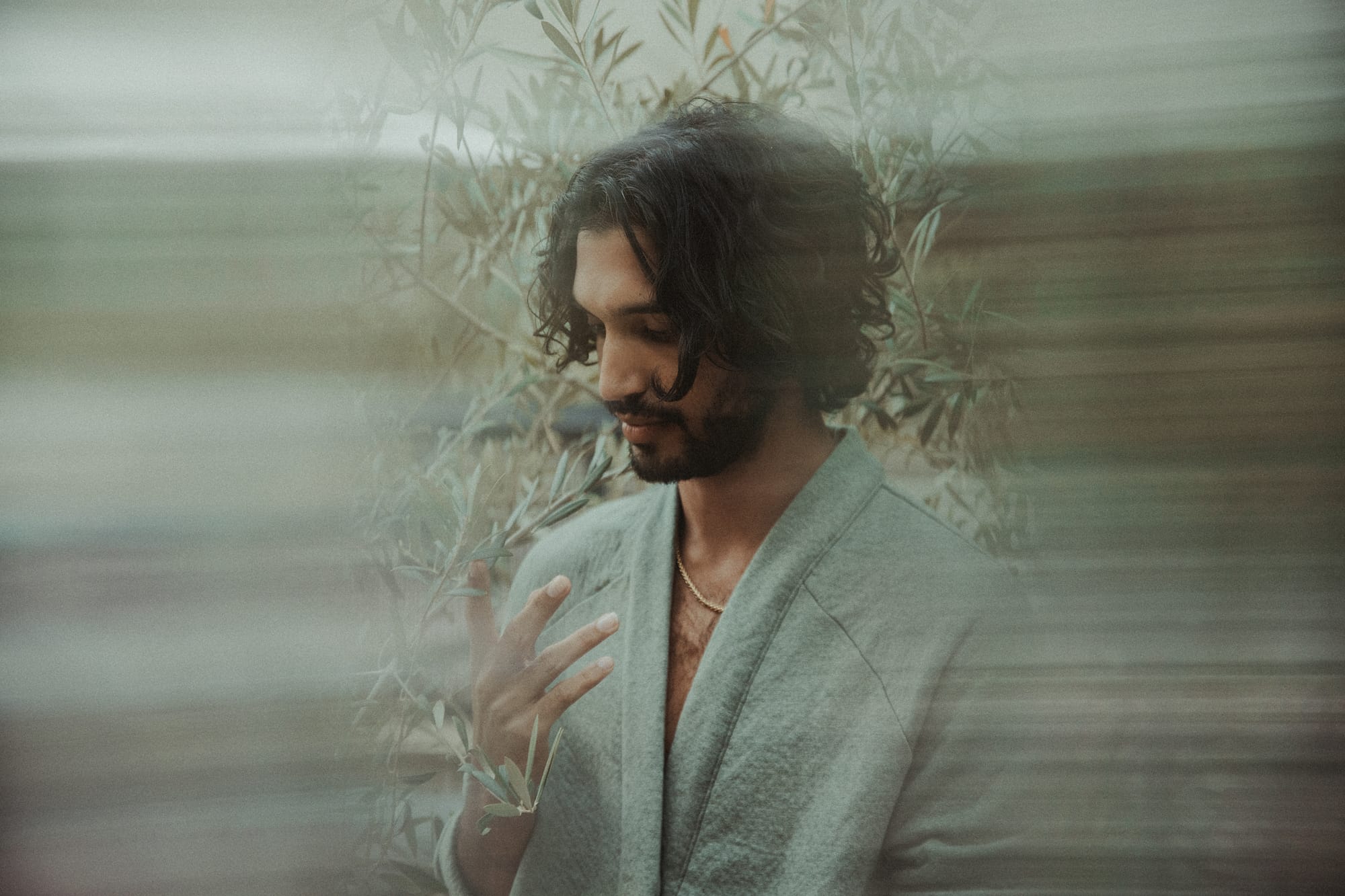
Axel Ibrahim Mansoor was born in Bethesda, Maryland to Mauritian parents, but grew up across three continents before settling in Los Angeles after studying at the University of Southern California. A self-taught musician, he is an Emmy-nominated singer and songwriter, best known as the founder of Lullaby Club, a live music and community space that began on Clubhouse (a social audio app) during the pandemic, and as a finalist on NBC’s talent reality show Songland. He has written commercial music for brands including Lexus and Softbank, and now combines his background in psychology with music to create experiences centred on healing.
In early 2021, Axel Mansoor thought that he’d finally arrived. He was going viral on Clubhouse, singing strangers to sleep every night on an app that was downloaded en masse during the pandemic. He was being co-managed by John Legend's management team. A major distribution deal was in the works, and he was profiled in The New York Times. But he’d lost his will to create music. ‘My sense of everything I was, and wanted to be, was shattered’.
‘You are not known,’ he explained to us via Zoom from sunny, breezy LA. ‘You are not felt. You are projected upon. You become a symbol. I realised the only way to heal my relationship to music was to disentangle all this pain from it, and that I couldn’t continue to make music if I was seeking validation and making money from it.’
Healing his relationship to music required turning away from fame, exploring who he is and where he came from, and interrogating the ways in which he wielded his art.
Axel’s father, Ali Mansoor, is one of the most significant Mauritian economic technocrats of the last three decades: a man who shaped the island's fiscal architecture and then took that expertise to the world's leading international institutions. Axel’s brother Misha is a Grammy-nominated musician, best known as the founder of the progressive metal band Periphery. His sister, Yael, is a neuropsychologist who has co-authored numerous peer-reviewed articles. Though Axel never explicitly said so, we guessed that anyone who was born into that kind of supra high-achieving family would have felt a little intimidated from the get-go; a sense, perhaps, that excellence was bound to be expected of them.
Axel was born in Washington DC, at the time when his father worked at the World Bank; the family emigrated a few times around the world, and then settled in Mauritius for a few years. Those years were difficult: after being bullied for many years in the US for being brown, of mixed heritage and from a country that few Americans would have heard of before, Axel was bullied during his time at a Mauritian private school for being ‘too American’.
He left Mauritius at fifteen, moving to Palo Alto to live with his older sister while she completed her PhD. He compressed two years of his American high school curriculum into one to bridge the gap left by the British system, carried a full class load, and worked shifts at Starbucks — all to save enough for plane tickets to fly to Washington DC every other month, to visit a girl he had been dating before the move. We pointed out that this was extraordinary dedication. 'I'm a lover, man,' he laughed. He eventually made it to USC as a psychology major, taught himself music — he was rejected from the music programme twice — and built a career through sheer persistence.
Music was his greatest sanctuary, but also, he says, his only source of self-worth. ‘It was this dirty fuel mindset, where I convinced myself that love and intimacy would only be gotten from becoming a super successful musician, because by then I’d be amazing, and as an amazing person, I wouldn’t struggle. I’d just shit great songs. I’d navigate the world with grace and clarity. Which is such a naïve way of understanding how success really works in this world.’
During the pandemic, he went viral for creating the Lullaby Club on Clubhouse: hundreds of thousands of people watched a Mauritian-American man sing them to sleep from his parents’ house in Beau Bassin. We understand why: Axel has a truly beautiful, ethereal voice. The Club’s success rocketed him to fame. ‘I had achieved my dream, everyone wanted a piece of me, I was the centre of attention, so validated, and it was the worst, because what I wanted was intimacy and this was the exact opposite.’
And this desire for intimacy, clearly, had been a thread running through his whole life. There was the excruciating pain of not being known and accepted in both countries that are his home; there was the fact, as he says, that he just didn’t love himself. Fame was supposed to bring self-love, self-acceptance. But what fame did was give him, in his own words, ‘a tidal wave of transactional relationships. As a human being who was really seeking to heal an intimacy wound, it was like radioactive material. Fame attracts a lot of attention and desire, not necessarily for you, but for what you represent. It's the opposite of being pulled in close.’
His vision of who he was, his identity, and his future was shattered. He left fame behind and chose healing instead. Slowly, he experimented with different paths: therapy; a long and serious relationship with ceremonial plant medicine; Internal Family Systems work; meditation; journaling. He realised, throughout the process, what it was like to ‘burn clean fuel’, in his own words, which led to healing. ‘I got to a place where I felt a lot more stable, and I wanted to know what would happen if I became a tour guide to people’s healing. Clean fuel is through service: the way I use the gifts, talents, privileges and all the beautiful things I’ve been handed through life to help people discover their own sense of self-expression. And using that fuel as the means by which I create music.’ He moved from performing into experience design and facilitation, weaving music back in slowly, on different terms. He runs a regular gathering in Los Angeles called Soup Soup, built around meditation and a bowl of something warm, with no mailing list and no monetisation strategy. ‘You have to be a very specific kind of person to want to do that on a Monday night in LA,’ he said. ‘That's exactly the point.’
That shift to clean fuel also transmuted his complicated relationship to Mauritius. ‘In Maryland, being brown was insanely difficult. I'd go to bed wishing I would wake up white. And that self-hatred turned into “Mauritius sucks”. I used to really reject my mixed heritage, which was very akin to rejecting my Mauritianness.’ When he returned to Mauritius during the pandemic, he met local artists and musicians working here and was stunned to experience a side of the island that he hadn’t known existed before. The friendships he made during his time here have lasted well beyond COVID-19.
Axel surprised himself when he both proposed and got married on the island. ‘That fundamentally etched Mauritius in my heart,’ he said, describing how he planned a seven day festival for his mostly American friends, taking them on hikes, feeding them dholl puri and boulettes. ‘I’d never been able to share my culture before, show things about Mauritius that I loved, through the context of love.’ His healing journey mended his relationship to himself and, by extension, his relationship to his island.
We left this conversation thinking there is something radical about a man who walked away from the kind of success most musicians spend their lives chasing, and found his way back to music through service. The clean fuel he runs on now — the art he makes, the intimacy he is bathed in — all of it is an expression of love. In Los Angeles, of all places, that feels like a revolution.

The Reunionese restaurant Maloya, in NYC, is hosting its final ‘dîner des Mascareignes’ on the 7th of June! Register here. Maloya is a firm favourite of New York-based Mauritians; the dinner aims to gather the wider Mascarene diaspora in the city for an evening of Reunionese and Reunionese-inspired cuisine, paired with Mauritian and Reunionese music. It sounds like a really good time.

Bridge playlist
In this edition we’d like to bring Wayowaya by Menwar to your attention. Menwar’s music is singular: it is deeply layered, complex, and incredibly moving. Menwar is a musician but also archivist, historian and researcher: he has investigated and documented the instruments that enslaved Africans and Malagasy people brought to the island, the ones they created, and the sega music that they composed – the kind of sega which was banned by the Catholic church in the times of colonisation because of its African spiritual nature. You can hear echoes of this music in this song.
Kreol crossword puzzle

P.S.1: Did you guess the answer to the last Bulletin’s sirandann?
Dilo diboute? Or, what water stands up?
It’s kann, or cane: water is ‘straight’ in the sugarcane’s stem.
P.S.2: Know somebody who is missing Moris? Forward this publication to them, and spread the mauricianisme!