‘Kiete sa?!’ can be heard in living rooms across the country these days, as the latest round of scandals hits the island. From large companies going under to Mauritians making the headlines for not-so-good reasons, the past two weeks have us wondering if we can just sage all of our institutions – or pour saltwater over our heads. But hey, at least we have the joy and the goofiness of Erling Haaland to take our minds off things for a little while. Long live Gen Z.

News digest
To start off with something positive-ish: Moody's has maintained Mauritius's sovereign rating at Baa3, keeping the country in investment-grade territory, and the reasoning behind the decision was actually pretty encouraging: the agency acknowledged that budget execution came in better than expected over the last fiscal year, with the deficit landing at 3.7% of GDP (below forecasts), thanks to a larger-than-anticipated reduction in current spending. It also noted that the public-debt-to-GDP ratio is beginning to stabilise, where the agency had previously expected continued deterioration.
Evaco, a luxury-property developer, has gone under administration. 350 employees haven’t been paid since April, and around 200 clients – both local and foreign – had bought into Evaco’s Cap Marina project in Grand Baie; none of these people know if they’ll be getting the money that they are owed. The company’s CEO, Arnaud Mayer, was profiled on CNN a decade ago; in that decade he’s been known for his outrageous lifestyle, private aircraft and other outré signifiers of wealth. Mayer has issued quite a revelatory communiqué, brilliantly analysed by Scoop.mu, which we’ll quote here: “le président-fondateur d’Evaco a émis un communiqué de trois pages, destiné à ses « chers clients, chers investisseurs, chers partenaires », auxquels il déclare : « C’est à vous que je pense aujourd’hui. » Pas à ses employés, qui n’ont pas reçu leur salaire depuis deux mois?”
This occurred late in May, but given the economic context we felt we should also report that World Knits, a large textile firm, was placed under voluntary administration on 26 May after a turnaround plan submitted in January 2026 failed to hold off the threat of liquidation. 550 workers are directly affected; the group also comprises Kline Textiles and Universal Fabrics, and much of the workforce (mostly women) has been on technical unemployment for weeks.
And, in case you missed it in the news last month – the iconic Floreal restaurant, La Clef des Champs, is also under administration.
Air Mauritius is hit, once again, with another scandal. A forensic investigation conducted by Kroll examined the sale of five aircrafts during the 2020/21 voluntary administration of the parastatal company; the investigation points to suspicions of conspiracy and to "falsified and misleading" reports allegedly produced knowingly by Ken Arian and former CEO Krešimir Kučko to justify buying an additional A350-900, against internal documentation concluding an A330 was the more economically sound option. The aircraft sales alone are estimated to have caused a loss of around Rs 1.2 billion.
Shaan Kundomal was arrested in Dubai on the 26th of June, and though he has been released he can’t leave the UAE until the government’s investigation is complete. If you don’t know who he is: Kundomal is an incredibly well-connected lawyer and businessman, whose networks connect the island's offshore finance sector to political power both in government and in the opposition; he is reportedly a first cousin of former Prime Minister Pravind Jugnauth and his wife is related to Junior Minister Dhaneshwar Damry. He directs Capital Horizons, recently rebranded Aurevya Wealth Ltd, alongside Gulf Management Services in the UAE. Last month he was intercepted at Dubai airport over an alleged embezzlement of roughly US$3 million (about Rs 144 million) on a complaint by an investor-client, and reportedly drew further questions after presenting an Indian passport bearing a different spelling of his name. This is not the first time his name has surfaced in a governance context: in 2021, The Sentry — the investigative NGO co-founded by George Clooney — named Capital Horizons in a report alleging it helped structure Mauritian entities linked to Zimbabwean tycoon Kudakwashe Tagwirei, moving suspect funds through the jurisdiction (allegations the firm denied, threatening to sue).
Ashok Prayag is an actuary with more than four decades in finance and insurance who currently chairs SICOM — the state insurer that manages the government employees' pension fund — and who chaired the Committee of Experts on Pensions behind the government's ill-fated, remarkably brief pensions reform in late June. He’s been in the news recently because his name was advanced for a newly created vice-chairmanship position at SBM Holdings: at the bank's Annual General Meeting on the 26th of June, shareholders staged a walk-out to protest his appointment as a non-executive director, citing conflict of interest.
From hairdressers to clothing designers and content creators, Mauritians are rightfully riled up at the government's plans to introduce a National Pension and Provident Fund (NPPF) in 2027, which would see self-employed Mauritians pay a charge ranging from 9-13.5% on their income. The pension reform lands heaviest on precisely the self-employed person who cannot predict next month's income – and importantly, women seem to make up quite a large number of people in that category (perhaps even more so in the months to come, given the measures announced in the budget).
Mauritius on the move
An ecocide offence entered Mauritian law this April, tucked inside the Anti-Money Laundering (Miscellaneous Provisions) Act 2026 (which is weird, but also true to Mauritius in a way). Section 135A of the amended Environment Act 2024 now defines ecocide as an unlawful or wanton act committed with knowledge of a substantial likelihood of severe and either widespread or long-term environmental damage, carrying up to ten years' penal servitude, plus restoration orders, compensation, and exclusion from public tenders.
The Office of the Director of Public Prosecutions (ODPP), which has been advocating for this offence since April 2021, published Issue 138 of the ODPP newsletter last month themed Silent Killers. ‘Ecocide, as enacted, captures most forms of criminality against the environment and ensures that perpetrators are punished and that victims are adequately compensated. If properly implemented, it will act as a powerful deterrent and dissuade individuals and enterprises from harming our environment,’ writes Nataraj Muneesamy, Assistant to the DPP, in his last editorial for the newsletter. He also notes that Mauritius is one of about ten countries in the world to have criminalised ecocide so far.
The newsletter is a great read, with many good points made by its contributors. Pamela Bapoo-Dundoo (Eco-Counsellor and National Coordinator for UNDP Mauritius), for instance, writes that ‘derivatives of pesticides banned in Mauritius were detected on local fresh produce according to the PRO report released in January 2026. How did these banned pesticides get into the country? Who sells them? Could this illegal and reckless disregard constitute a crime of ecocide?’ Perhaps, with the help of this law, the zealous use of pesticides in Mauritius will finally come to a halt.

Diaspora spotlight
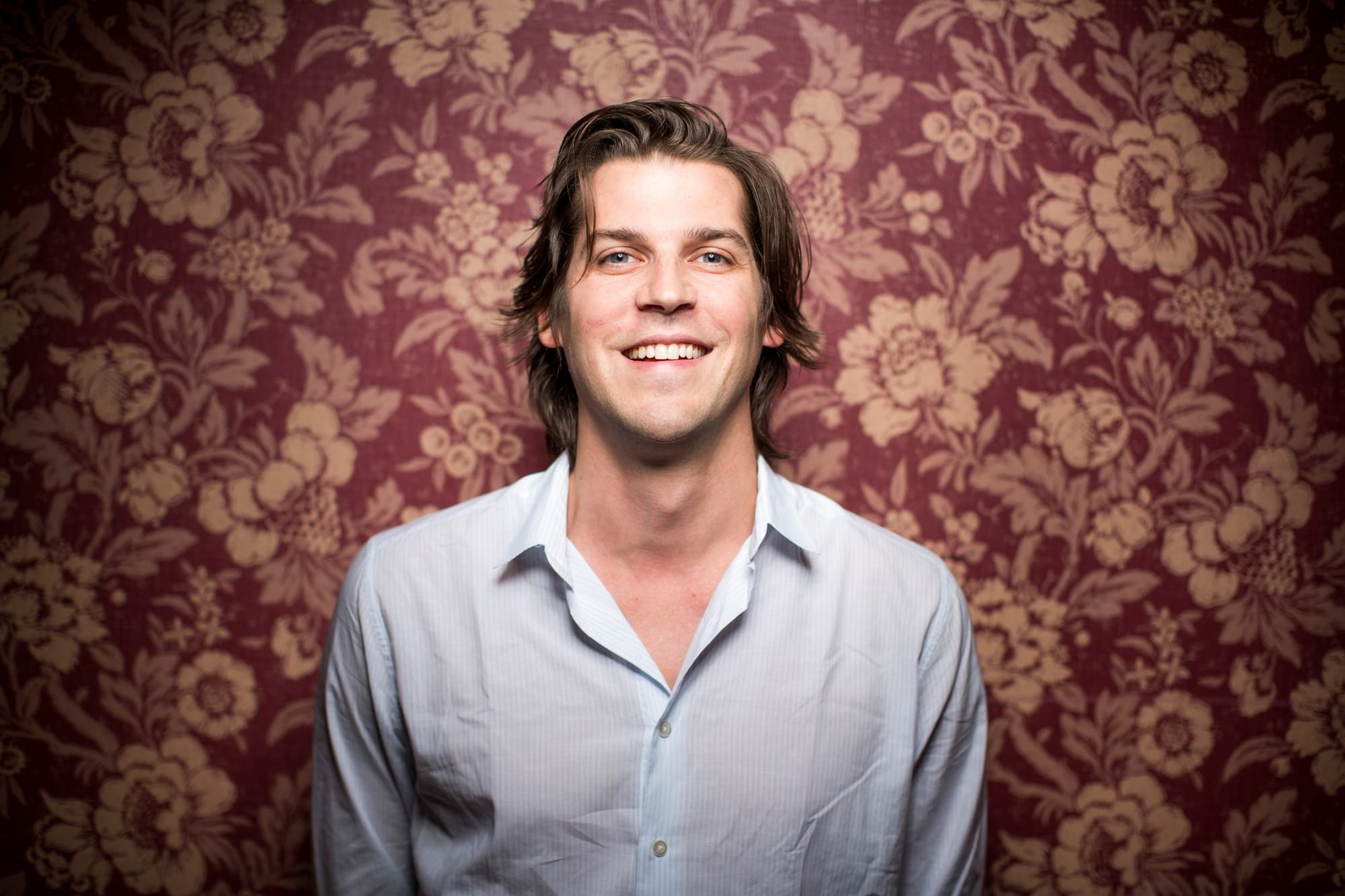
Alex read English literature in the mid-2010s at university; she often used Google’s NGram viewer – for fun, and for her essays – to trace the rise and fall of a word over centuries. She didn’t know that one of the inventors of the NGram was Mauritian.
Jean-Baptiste Michel is a French-Mauritian scientist and entrepreneur who, with his collaborator Erez Lieberman Aiden, helped create the Google Ngram Viewer and co-authored the 2010 Science paper that named a new field: 'culturomics', the quantitative study of human culture through the computational analysis of digitised texts. Their corpus held roughly 4% of all books ever printed, and the tool they released could trace how a word or a name surges or vanishes across two hundred years. In 2013 Michel and Aiden turned the work into a book for general readers, Uncharted: Big Data as a Lens on Human Culture.
Fame came fast. As a founding director of Harvard's Cultural Observatory, Michel saw his research published in prestigious academic journals Science and Nature, and covered by the New York Times and Boston Globe; the Ngram Viewer itself was used millions of times. He became a TED Fellow and gave a widely watched talk on the mathematics of history. His curiosity spilled beyond the lab into art: he founded a short-lived venture applying data science to the art market, and a sculpture he built at his Brooklyn apartment (his first piece of art) was exhibited and then acquired by the Whitney Museum of American Art. It’s called I WISH I could be exactly what you're looking for (more on the piece here).
An engineer of the École Polytechnique in Paris, he also holds a master's in applied mathematics and a PhD in systems biology from Harvard, and was named one of Forbes' 30 under 30 in the sciences in 2012. He left academia and founded Quantified Labs, a data-science shop working with ‘exhaust’ and location data, which was acquired by Palantir in 2014. Michel spent nearly three years there as a forward-deployed engineer.
After leading data science and then the US operation at the AI drug-discovery company BenevolentAI, he jumped back into entrepreneurship as a co-founder of Patch Biosciences in 2020, a startup whose platform used deep learning to design synthetic genetic instructions for more precise genetic medicines. Ginkgo Bioworks acquired Patch in 2024, and Michel stayed on to help launch the synthetic-biology giant's first data product before becoming a venture partner at Basis Set in 2025, where he now backs early-stage biology companies.
According to his LinkedIn (my dude, if you’re reading this, sorry we’ve been creeping), Basis Set has co-led an investment in a cancer-data startup called Valius Sciences. This is particularly exciting news: a good number of experts now believe that the future of cancer treatment is deeply personalised – think molecular level – and Valius aims to deliver that to people who aren’t billionaires.
Culture corner

Everything is political – even football, the opium of the masses. On stage we’ve seen this poignantly in the Egyptian team’s staunch support of Palestine during this year’s World Cup – and in the way the team was treated in their last match against Argentina.
Politics – racial and governmental – defined, built and then pretty much destroyed the landscape of Mauritian football.
Mauritian football is older than the republic. The Mauritian League was founded in 1935, and the Mauritius Football Association (MFA) followed in 1952. From the beginning, teams were ‘organised’ by race and religion (instead of being organised regionally). So you had, for instance, the whites-only FC Dodo, the Hindu Cadets, Muslim Scouts, Chinese Dragons, and the (Creole) Fire Brigade. In the 1980s the Sports Act was passed, forcing teams to drop their communal labels, but even though the names changed the allegiances and composition of the teams did not.
Then came 23 May 1999. A riot following a controversial penalty in the championship decider between Fire Brigade and Scouts Club lasted three days and killed seven people. That the teams were ethnic-based made the riots all the more inflammatory, and crucially too, those riots took place only three months after the murder of Kaya and the social unrest that followed in February.
So the government banned all domestic football for eighteen months, with only the national team permitted to play. The state also made sure that domestic teams would henceforth be formed regionally, rather than based on ethnicity or religion. It achieved the intended reduction in violence, but just as it dissolved ethnic and sporting rivalries, it also dampened local interest in the sport.
This said, though, our national team was quite strong. The national team played its first competitive international game in 1947, beating Réunion 2–1, and for the next twenty years contested the Indian Ocean Triangulaire with Réunion and Madagascar, an insular circuit Mauritius won no less than ten times. In 1974 the national team qualified for the Africa Cup of Nations (to this day, it is still Club M's only appearance at the continental finals), and won the Jeux des Iles in 1985 and 2003, garnering silver medals in 1990, 2011 and 2019.
Mauritius sat 116th in the FIFA rankings in the year 2000. They are now 178th. Sadly, too, the women's team has at times been ranked bottom in the world – when ranked at all. Much of our current situation has to do, allegedly, with how the Mauritius Football Association (MFA) is run.
The MFA has been helmed since 2013 by Samir Sobha, whose legitimacy was contested from his first weeks in office. There are a number of scandals associated with his presidency, with a rough timeline as follows:
– in 2018, referees said they were still owed roughly Rs 1 million months after the season ended.
– in 2019, FIFA fined Cercle de Joachim — a club of which Sobha was a director — over improperly registered transfers of Malagasy players (several of whom were reportedly working without permits), and fined the MFA for tolerating the situation; the fine was reportedly concealed from the MFA's own executive committee, and Sobha was later summoned by the Central CID.
– in 2020, the national futsal team was in Laâyoune for the Coupe d’Afrique des nations de futsal (CAF) when the Mauritian government ordered the team to withdraw from the Cup for diplomatic reasons over Western Sahara. The team were effectively stranded in the country. The MFA owed roughly Rs 3 million to the CAF, and it emailed the South African Football Association asking them to pay the hotel bill. CAF's response was a $75,000 fine and suspension from the next two editions of the tournament.
– in 2021, police investigated a recording device found in the women's toilets at MFA headquarters; two board members resigned and Sobha was publicly told to take responsibility.
And if you’re wondering, yes, Sobha still presides over the MFA.
A number of footballers of Mauritian descent are making us proud, though. Kévin Bru was born in Paris, trained at INF Clairefontaine, represented France at youth level and played in the Championship for Ipswich Town before choosing Mauritius in 2011 through his Mauritian parents; he has captained the country and is still playing at 37. Lindsay Rose came through the Rennes academy, played for France at under-18 and under-19 level, and now plays for Aris in the Greek Super League. Nineteen-year-old Gabriel Caliste is at West Ham's under-19s; in Australia, Cooper Legrand plays for Dandenong City.
And you’ll remember from our previous Bulletin the incredible story of Vikash Dhorasoo. He won Ligue 1 twice with Lyon, was named the league's player of the year in 2003/04, reached the 2005 Champions League final with AC Milan, and earned 18 caps for France, including the squad that finished runners-up at the 2006 World Cup.
We want to thank Khalil Cassimally’s great thread on the subject for helping us research and write this piece - and for his concern with the goings-on in Mauritian football.

Sirandann
From Arnaud Carpooran’s Proverb ek Sirandann Repiblik Moris, we bring you a riddle that’s gory but quite beautiful:
– Koup mo vant tir mo trezor?, or, cut my stomach, take out my treasure?
Yes, it’s something you eat. See you in two weeks for the answer.
The Bridge playlist
So there's no official Mauritian football anthem, but given how much our content this week has talked about the 'années de braise' and the aftermath that followed, we thought it was worth highlighting this masterpiece by Grup Latanier, called Krapo Kriye. The song, firmly anchored in the local protest song tradition, doesn't speak of elections or strikes but of poverty and domestic violence. The brilliance of the song is that it traces the chain of oppression one link further than the movement's political anthems did; the man crushed in the fields comes home and terrorises his wife.
Kreol crossword puzzle
P.S. Know somebody who is missing Moris? Forward this publication to them, and spread the mauricianisme!