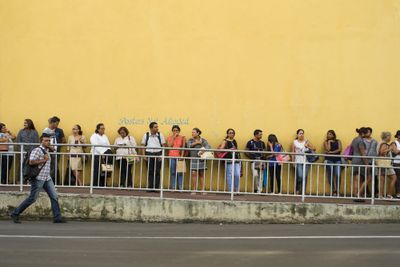

Bonzour everyone! Revolution – and revolutionising systems – seems to be the word(s) on everyone’s lips lately. There’s the ‘revolution’ in our pension system, but also talks of a general strike; people thinking out loud about what a new political future for the island could look like, and MPs actively reimagining Mauritius to become a safer, more inclusive nation.

News digest
In excellent news for Mauritius, the Domestic Abuse Bill 2026 was voted in parliament on July 10 at the National Assembly. The law has now widened the definition of abuse to psychological, economic and digital harm, and an amendment to the Criminal Code makes marital rape an offence. MPs introduced a concept that previously existed nowhere in Mauritian law — the "adult interdependent relationship" — which for the first time brings same-sex couples within the protective framework of the law. Arvin Boolell reaffirmed his commitment to equality by stating overtly in parliament that “I think we should talk of homosexuality without fear or prejudice, because all human beings have equal rights”. We love to see it.
In related news, l’express published a harrowing but necessary article on domestic violence in Mauritius. Journalists analysed a decade’s worth of statistics, finding that in a decade, ‘la violence a changé d’adresse : elle est passée de la rue à la maison.’ In 2015 the typical assault victim was a man attacked in public; by 2025 it was a woman attacked at home by someone she knew, with six in ten victims linked to their attacker.
On Saturday July 11, several thousand or so Mauritians walked through Port Louis to tell the government to leave the old-age pension system alone. In the protest, one could hear "pa tous nou pansion" and, perhaps even more significantly (and in an unmistakable echo of 2020) – "bour li deor." The protest was organised by the Platform Komun Syndikal, the broad union front demanding that the government restore pension eligibility at 60 and for it to keep the universal pension system intact. On July 15, the IMF urged Mauritius to press ahead with the pension reform, and that external endorsement has become its own flashpoint. The word on the street is now that a general strike may very well be a possibility.
Roshi Bhadain is, once again, auditioning to be Mauritius’ next Prime Minister – that’s how his party explicitly described him during the Reform Party rally in La Louise last Sunday, anyway. Most of the meeting railed against the pension reform: with slides and figures, Bhadain argued the state can well afford a universal pension and owes the IMF nothing, accusing the government of hiding behind the Fund.
In other party news, Dev Sunassy unveiled the latest iteration of Linion Moris’ political identity on July 10, and was part of the march against the pension reform the following day.
A Financial Crimes Prevention Review published by the FCC found grave weaknesses in the health ministry's pharmacology and import-control system. The picture the FCC paints is of a control regime still running on paper and manual steps, with poor coordination between services and flimsy supervision. The report warned that these failings were serious enough to create fertile ground for corruption, fraud, the diversion of medicines, and even the financing of drug trafficking. The review was prompted by denunciations of dubious practices, focussing particularly on pregabalin, a substance classed as a dangerous drug for its abuse potential.
Citizens are now able to report a water leak straight from their phone onto the Mauritian government’s KOREK! app; the app allows for photo uploads, geolocation, AI triage and complaint-tracking. Mauritius, as you know, has one of the highest water-loss rates in Africa. The 2024-2025 audit found that lost treated water amounts to 53%-71% depending on the zone, with 195 to 200 million cubic metres treated each year but never captured or billed, a shortfall the report costs at around Rs 3.6 billion. In Parliament on July 14, the Minister of Energy made reducing those losses the first pillar of his 'Marshall plan' for water: 114 km of worn pipes are to be replaced under a Rs 2.9 billion Indian line of credit; meter renewal, telemetry, a national strategy being drawn up with Singapore Cooperation Enterprise are all in the works, too.

Diaspora spotlight
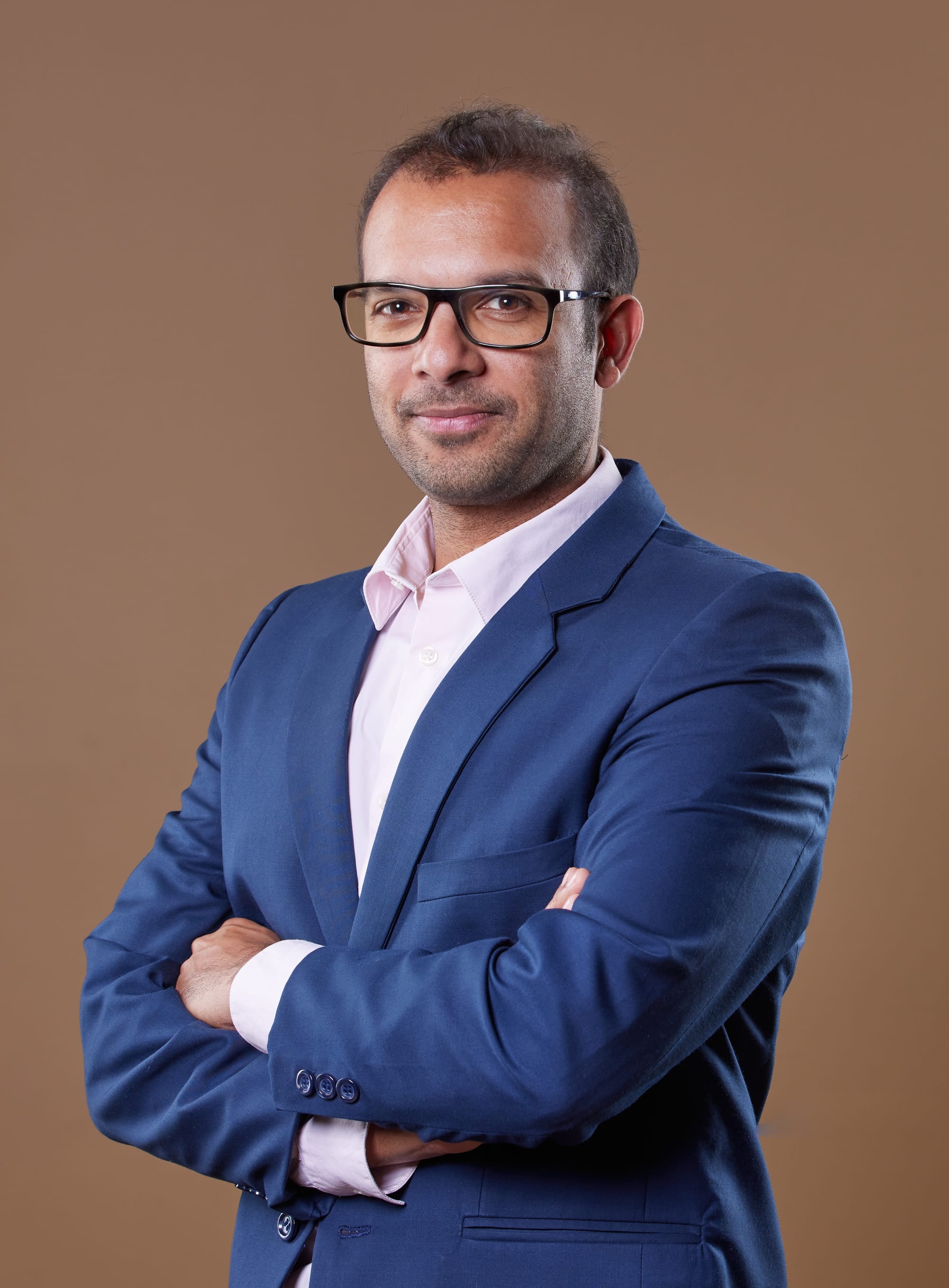
Avnish Gungadurdoss is a Mauritian economist and social entrepreneur who has spent his career thinking about how to make governments actually work for the people they serve. After reading economics and mathematics at Dartmouth, he was dispatched by MIT's Poverty Action Lab to rural Rajasthan, running a voter-awareness campaign for Esther Duflo and Abhijit Banerjee a full decade before their Nobel Prize. After India, he enrolled in an MPA-ID at Harvard Kennedy School; upon graduating he went on to co-found Instiglio, a non-profit built on the premise that organisations paid with public money should be paid only for the results they deliver, and was named a Forbes 30 under 30 for his work. Now headquartered in Moka, Mauritius, with offices in Colombia, Kenya, Morocco, Uganda and Ecuador, Instiglio has spent over a decade proving that premise across three continents. His latest venture, the Government Empowerment Network, extends the mission further still.
Alex interviewed Avnish for this Spotlight, because – as you may have guessed – Yashna is his sister. The ‘I’ here is all hers. We also chose Avnish because you’ve been telling us that you also want to hear stories from diaspora members who have returned to Mauritius; more returnees will be profiled in our issues to follow.
Avnish Gungadurdoss arrived in Colombia in 2012, with a one-way plane ticket, 2000 dollars in his personal bank account, and not a word of Spanish on his tongue. He was 26 years old, and had just founded a non-profit with two of his classmates from Harvard. That first night, they slept on the airport floor; the next day, they were pitching their idea to the mayor of Medellín in his residence. As incongruous as it seems, he was in a tougher situation around four years prior in India, working under two Nobel laureates on an incredibly ambitious voter awareness campaign. You don’t have that kind of fire unless you are dedicated, to your marrow, to improving people’s lives.
Avnish’s childhood was a little avant-garde for a Mauritian family. ‘My parents were interested in more than academic excellence,’ he told me over coffee in Moka, where he now lives and works. ‘I didn’t have tuition until Form 6. I swam, played football, went to a school that had a more holistic developmental approach – St Esprit – even though most of my cousins were at the Royal College.’ When he was in his mid-teens, his parents began investigating what tertiary education could look like for their son. His father visited different embassies, compiled different dossiers on each system. ‘He was my career counsellor,’ Avnish says.
As an aside, I want to say that I love Avnish and Yashna’s parents. They treated me like zanfan lakaz from the very first day, making banana fritters for me, picking at least five big grappes of letchi from their tree in December. It’s no accident, I believe, that both of their children forged careers for themselves in non-profits, that giving back is at the core of who they are. Mala worked as the Assistant Director of Crop Research at the Food and Agricultural Research Institute, and Javind is an engineer who worked for SITA (Société Internationale de Télécommunications Aéronautiques); Javind also taught physics, both at tertiary level and as a private tutor (teaching both his children, of course). Both parents were awarded scholarships by the French government, and this is how they met in La Réunion during their university years.
The ‘American’ binder, as it were, was the most compelling one for Avnish. ‘I didn’t have to choose my track. I was on the ‘science’ track at school, but I liked economics and thinking about poverty, development, resources.’ I asked him how that happened. ‘There was a lady who worked at our home – I called her Tatis. She was like my second mother. She took care of me until I was around 13-14 years old. We visited where she lived, and her house was modest. That sort of experience can be very generative, for a kid, because you’re thinking about what can be done, the ways in which she could be better off, what could change for the better. You’re thinking of your own opportunities and privileges and access, compared to her children and grandchildren. You get to thinking that people need opportunities, dignity, the feeling of not being stuck in a situation. And as you grow up, your diagnosis of the problem and the ideas you have to solve the problem keep evolving.’
Avnish won a state scholarship and arrived in Dartmouth in 2005, majoring in economics and mathematics. ‘In Dartmouth I was able to study development economics, and one of the professors there was part of a network of researchers associated with the Poverty Action Lab at Massachusetts Institute of Technology. I was able to study different policies, evaluate the best ways to improve people’s lives, get into the science of poverty elimination.’ By the time he graduated from Dartmouth in 2009, he was sent by the Poverty Action Lab to India to work directly with Esther Duflo, Abhijit Banerjee and Rohini Pande (a decade later, Duflo and Banerjee would win the Nobel Prize in Economics). The economists put Avnish in charge of a voter awareness campaign aimed at decreasing gender bias against women in rural India. They targeted 800,000 people living across 600 different villages in Rajasthan. The experience, which lasted about fifteen months, was – to put it mildly – deeply formative. He arrived in India speaking no Hindi, and was assigned a whole different mandate and entrepreneurial responsibility from the start. ‘I was 22, unsupported, and had to figure out within weeks how to mobilise partners, NGOs. We assembled a team of over a hundred people from scratch.’
The project involved coordinating sixty or so street artists to canvass all the villages, entertaining and informing their audience about gender biases and showing that women performed just as well as men in public service. He was poorly paid – ‘the most luxurious thing I could do was go to an egg walla’ – living in isolation, working non-stop. He learned how to ride a motorcycle. He learned how to deal with ‘risky situations’. He learned how to deal with police when they commandeered his vehicles during the electoral period. After the project, Avnish was completely burnt out but he had learned a tremendous amount of information.
‘India at the time was running the largest guaranteed work programme in the world. After going from village to village and gathering masses of information, we saw that the programme was essentially riddled with corruption, leakages, fraud and inefficiency; very little money ended up with its beneficiaries.’ The gap between policy and the actual value-add of that policy was immense, and it seemed to be a worldwide problem. ‘Hundreds of hours could be spent designing an excellent policy that would get shredded almost the moment it was put in practice.’ Avnish then began to be interested in policy implementation. After completing his project in India, Avnish headed to Harvard Kennedy School with a scholarship to study Public Administration and International Development. There, he dug deeper into thinking about how to make governments work better. ‘I believe that governments should be the most high-functioning institutions in society, employ the best people, be rigorously accountable. Nothing is possible without accountability. We shouldn’t design institutions that assume goodwill from their employees; these institutions have to demand it.’ After graduating, he worked in different places and was, on the whole, underwhelmed: places that were riddled with their own incentive issues, places that felt too established to change.
Along with two of his classmates, he then decided to create a change-making institution from scratch, which is how Instiglio was born. ‘We figured that public finance is the blood of government work, and that every activity that the government does has public finance running through it. And so Instiglio was built on the idea of results-based financing: that if an organisation doesn’t deliver actual results, it doesn’t get paid.’ Their idea won Harvard’s public sector innovation award.
The team started looking at finding a political champion that would believe in their mission; the mayor of Medellín would regularly crop up in their searches, presented as an inspirational, values-driven man. With 10,000 dollars, the team headed to Colombia. ‘The mayor opened the living room door to his house and his whole cabinet was there. We had thirty minutes to pitch them, and they said yes on the same day. We started working unpaid, began working day and night, recruited people who accepted to work for free in the beginning, because they believed in our vision.’
Instiglio built momentum fast. ‘We started showing funders and other people that we could get the Colombian government to pay attention, and got our first big grant. Our operations expanded beyond Colombia into Africa and India; we were profiled in The Economist. We spent the next decade demonstrating our methods, building and refining a culture of performance in public institutions – showing that you can get one, two, even three times the results with the same amount of public finance.’
Instiglio is now scaling their method around the world. Naturally, I had to ask him about his view of Mauritius’ public sphere. The public sector has been immured in its own inefficiency for decades now; audit reports raise alarms every year, but not much is ever done.
‘Governments, as we know them today, were designed and built at a different time. They are unfit, by design, for the time that we live in. Through Instiglio we’re demonstrating that another, results-driven system is possible – a system already adopted many years ago by Singapore, for instance, where 35% of every minister’s salary is performance based. And those salaries, too, are really high. Ministers have real incentives to work for the people, and are held accountable. In Mauritius, one of our biggest weaknesses is that we don’t have term limits, which leads to lots of stagnancy in ideas, and an acute concentration of control and power. We’re also mistaken in believing that all we need for change is to replace the people we have now with different people. What we do need is a new system that incentivises new leaders to emerge, leaders who know they can achieve the highest levels of public office meritocratically.'
He adds that the institutions that make the government accountable have to be safeguarded. It’s no longer just a question of issuing audit reports; Avnish believes a whole system has to be built to properly audit statal bodies, and the organisms must be independent and safeguarded to the highest degree.
I ask him, finally, if he has any hope for the future of our country. ‘We would need, first, a real moment of rupture. We aren’t far from it. People are really disenchanted with the players in the system and the system itself. We are lacking a credible third option. If that third option emerges – and creating that option would be the most charitable thing that anyone in Mauritius could do – it could develop a new philosophy of government with real resources behind them. Mauritius has all the assets to succeed, but that capacity to succeed requires a different mould, and none of the political players at the moment have it.’

We want to build Bridge Moris with the diaspora, not just for it. Enter our Labs.
Our first edition – Lab 01 – is a 90-minute co-design session where diaspora members get a chance to help us shape our upcoming talent platform, so that contributing to Mauritius from abroad feels fulfilling and impactful.
This first Lab focuses on the Flexible Engagement Track: ways to bring your skills to Mauritius without moving back: think advisory roles, short missions, and remote work. What you share with us will directly shape what we build.
Come ready to brainstorm and share what you think will be important for the success of this platform, and what would make it fulfilling to you. The session will consist of an overview of the Bridge Moris diaspora talent platform, breakout groups, individual brainstorming time, and small group discussions.
Spots are limited and every registration is reviewed, so sign up early. We cannot wait to kick off Phase 2 of Bridge Moris with you!
📆 July 30 · 90 minutes · Online
⏰️ 9.30pm Mauritius | 7.30pm Paris | 6.30pm London | 1.30pm New York
🎯 Register here.

Bridge playlist
Ras Kouyon’s melody is unforgettable: Kaya made this song into an almost religious lament for the ills and vices of Mauritian society.
Kreol crossword puzzle

P.S.1: Koup mo vant tir mo trezor? As we said in the last issue, the riddle may be a little gory but the answer is beautiful: it’s grenade, or pomegranate! A gorgeous, antioxidant treasure indeed.
P.S.2: Know somebody who is missing Moris? Forward this publication to them, and spread the mauricianisme!