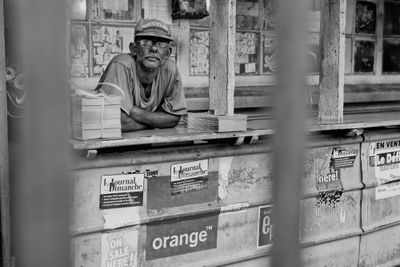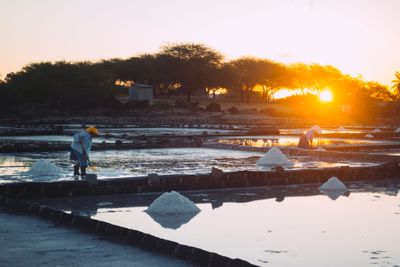

Last week, about a hundred people gathered in the Caudan Arts Centre for the inauguration of Zardin, Max Anish Gowriah’s latest exhibition. Zardin showcases Max Anish’s work but also the art produced by two newcomers to the Mauritian art scene, Crumplycrime and Guillaume Clarisse. Max Anish is one of Alex’s oldest and dearest friends; a core group of artists, writers and photographers was formed in the arts and textiles scene of the early 2010s, and it’s been incredible to witness a whole generation truly come into its own. That Max Anish’s show was collaborative is indicative of how differently they are doing things, and how good it feels to grow as a community.

News digest
The flamboyant trees are in full, zealous bloom, and there’s still no rain. Mare-aux-Vacoas was 33% full on 12 November, against 74.3% on the same date last year. Energy minister Patrick Assirvaden has opened consultations on a national water policy running to 2051, with backing from the Agence Française de Développement. In the meantime, new boreholes are being activated and Tamarind Falls is being connected to La Marie.
British Prime Minister Andy Burnham wants to rework the ‘Chagos deal’ to satisfy U.S. interests, modelling a potential new framework on U.S.-Greenland arrangements with Denmark. In parliament on 17 November, the Prime Minister of Mauritius said the republic would not ‘wait indefinitely’ for the British government to act, and that the state ‘is now considering all options available under international law to reach a definitive settlement’.
Borrowing in Mauritius is getting more expensive. On 11 November, the Bank of Mauritius raised its Key Rate from 4.75% to 5%, after annual inflation climbed from 4.4% in July to 6.4% in October. It is the second rise this year, after May’s increase from 4.50% to 4.75%.
Six years after the Wakashio oil spill, another incapacitated ship is sitting near a reef. The Jella Delta, a 229-metre bulk carrier bound for Singapore, lost its engines and drifted into Mauritian waters. Since 10 November it has been anchored about 4.6 km from Île Raphaël, St Brandon. Newspapers report that nobody has confirmed its cargo or how much fuel is on board, but that in any case, the anti-pollution equipment on site won’t be enough in the event of a spill. St Brandon, as you probably know, is one of the most pristine marine sanctuaries on earth.
In some good news, Mauritius has a new rising athlete to watch. Brice Tailly, 16 years old, was the only one of our ten athletes at the Youth Olympic Games in Dakar to reach a final. He finished seventh in the 110m hurdles after running a personal best of 13.72 seconds in the semi-final. His coach is already talking about Brisbane 2032.

Diaspora spotlight
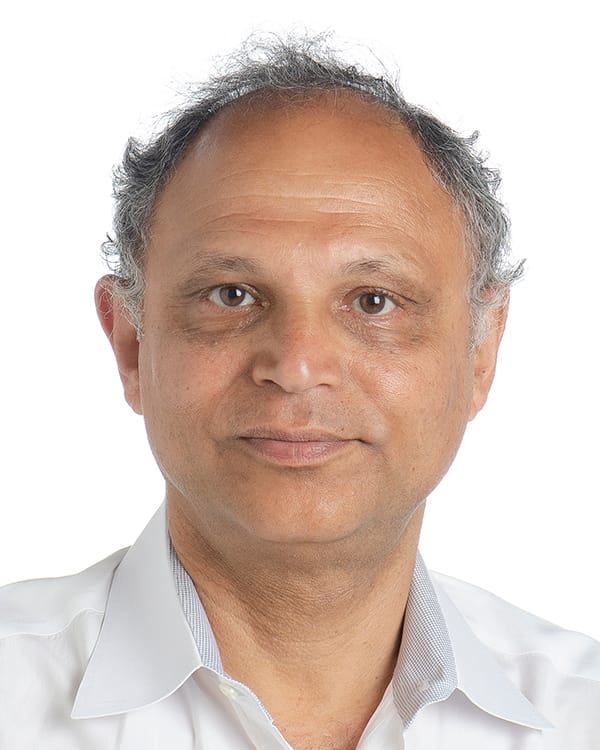
Ali Mansoor is one of Mauritius’ most esteemed economists, and while a considerable amount is known about his career, not that much has been written about his incredible background. He studied at the London School of Economics (LSE) and Harvard's Kennedy School, then spent more than two decades working for the IMF, the World Bank, the European Commission and the COMESA Clearing House in Harare. From 2006 to 2013 he was Financial Secretary of Mauritius, and in 2012 he chaired the Global Forum on Migration and Development. He was an Assistant Director at the IMF until 2019. From 2020 to 2025 he chaired the Regional Multi-disciplinary Centre of Excellence (RMCE), an intergovernmental body set up by COMESA, the Indian Ocean Commission and the Government of Mauritius. He currently leads the Development Enterprise Network (DEN), a non-partisan think tank.
In 1980, Ali Mansoor was planning to return to Mauritius. He had finished his degree and his Master's in econometrics and mathematical economics at the LSE, and a friend was going to drive him to the airport. "It was taken for granted that I'd study outside and then come back" he says. " Europe was there as a way station. America was never in the realm of possibility."
The friend was applying for a scholarship to the US and told Ali he should apply, too. Ali did so, and was offered a Kennedy Memorial Scholarship to study public policy. His trip back to Mauritius would take about three decades; he returned to the island in 2006, to work as the nation’s Financial Secretary.
To understand the arc of his incredible career – and the reason why he was intent on returning home – one must go back to his roots. Ali carries within him one of Mauritius’ most singular stories of migration. Ali’s mother was born in Austria and grew up in Germany. As a child, she punched a member of the Hitler Youth on the nose for calling her “dirty Jew”. She was able to escape the Holocaust when her father moved to England for work when she was a teenager. The Holocaust killed members of her family, her elder sister among them.
She trained as a doctor, and in London she met Ali's father, a Mauritian man of Muslim faith who was studying tropical medicine. They married, and she followed him to Mauritius. "She identified more with Mauritius than anywhere else," Ali says. "For her, Mauritius was the country that she adopted."
Ali’s mother was the result of an unwanted pregnancy, "so she felt very strongly that women should have a choice," Ali says. In Mauritius, with his father, she supported the creation of the Mauritius Family Planning Association. It was founded in 1957, when the island's population was racing ahead of its economy. The public credit of the Association went to others, chiefly R.T. Naik, who ran the association. But in Ali's telling, while his father was a very busy doctor, "my mother was getting the work done." Years later she visited Ali at the LSE, and they went together to see the social policy scholar Richard Titmuss, whose report on Mauritius in the early 1960s had shaped the family planning debate. Ali remembers the professor taking his mother's hand and congratulating her on what she had done.
The Mansoor household was an unusual one for the time, maybe even today. Both parents had seen enough suffering to lose their faiths during the War, but his father still took the children to the mosque at festivals, and there were always family gatherings. His mother, though there was no Jewish life in Mauritius then, raised them consciously within the culture and values of Judaism. Above all, she valued education. When Ali was around eight or nine, both his parents found their faith again. His mother had been reading articles in the press by a famous yogi named Swami Venkatesananda, and when he visited Mauritius she went to see him. "You are a very intelligent man," she told him. "How can an intelligent man believe in God?" He answered her with a question: "Do you believe in doing good? Then that's enough." It began a conversation that brought her back to faith, and Ali's father followed in her wake.
Even then, faith remained a private matter. "They didn't impose their views on their kids," Ali says, and his three siblings each went their own way. What they shared was what he calls "strong Enlightenment values", a belief in universalism. Their politics were a kind of practical socialism, "from each according to their ability, to each according to their needs," as Ali puts it, and "the principles that one must work for social justice in the world." "I grew up with very universal values, and I always grew up with a sense of patriotism. Not nationalism."
Identity, for the Mansoor family, was something transmitted, built and also fluid. His mother gave him a book by Hungarian-British writer George Mikes, and within it he found a lesson about what it is like to be a migrating body with plural identities: “once a foreigner, always a foreigner.”
The children went to Catholic schools. At the Collège du Saint-Esprit, an Irish priest, Father Mansfield, ran an astronomy club, and Ali's mother insisted on extracurricular activities. Ali admits he "can barely pick out Orion", but had good fun with his friend Bhasker Desai (who became an astronomer). When men landed on the moon in 1969, the club took him and Bhasker onto national television, presenting what life on the moon might one day be like.We told him that life as a Jewish-Muslim Mauritian boy must have been quite unconventional at the time; he said that, alone of all his family members, he doesn’t recall any racist incidents. “My children and siblings tell stories of encountering racism in Mauritius. Maybe I was too thick to get the signals. I’m sure there must have been things said that I just didn’t pick up on,” he said, and we laughed.
His parents had tried to change the world through social work on the ground. Ali was more interested in "how to change things so that everyone can benefit." That meant policy, and policy meant economics. At the LSE his advisor was Meghnad Desai, the Marxist economist who later entered the House of Lords. Since the LSE taught no Marxist or socialist economics, Desai told him to take an additional course at Birkbeck, where his mother had once earned an evening degree in psychology. He was taught by Ben Fine, a leading Marxist economist; by the end of the course, Ali says he asked Fine: "All this is very good, but what happens when a socialist government comes into power?" Fine answered, "It will depend on the outcome of the class struggle." This, Ali said, wasn’t immediately practical, and Meghnad Desai encouraged him to go to the Kennedy School to learn about practical policy making.
Boston gave him a different kind of education. "At LSE I learned what is desirable," he says. "At the Kennedy School I learned what was feasible." He still remembers one exam question. New York had wanted its police walking the beat through the winter, and helping with domestic disputes. Both reforms failed, and the question was why. The incentives were against the first. The second was never going to work: "People who join the police don't want to be social workers." For Ali, that is the whole lesson: "Getting incentives right is the challenge."
The pull of home was still strong. "I was like all the people in my generation, a strong believer in the MMM," he says. In the summer of 1982, with his studies unfinished, he came back with his wife Maria to campaign for Rama Poonoosamy in Moka (the same man who later became Minister of Culture). He assumed his future lay at the Ministry of Planning. Rundheersing Bheenick, later Governor of the Bank of Mauritius, told him not to return to Mauritius quite yet – that he had to finish his studies first.
Rama Sithanen, a year ahead of him at the LSE, had warned him never to study public finance, "the most boring subject ever". After graduating, Ali was offered a job at the IMF and realised that public finance was the core of policy making. So he walked into the IMF’s fiscal department and asked whether they would "substitute enthusiasm for knowledge". They did.
In 1988 Michael Sarris brought him to the World Bank's Africa region. Both men co-wrote a report arguing that open regional trade could be a stepping stone to world markets. It "created a lot of fuss" at the Bank, Ali says, "because the World Bank was full of dogmatic free traders." The European Union liked the report, though, and in 1992 with his family he moved to Brussels to work on African regional integration for the European Commission.
Reform needed committed teams in every country, and coordinating them by phone was close to impossible. Email was just arriving, so Ali suggested using it. "My colleagues were in disbelief that email existed," he says. "We did use email, and it did work."
In 1997 he went to Harare as chief executive of the COMESA Clearing House, which had been founded by central banks across the region to settle trade with one another without spending scarce foreign exchange in the days before economic liberalisation. His mandate was to set up a new payment system for the era of liberalisation and a trade insurance agency. The Trade Insurance Agency was set up with assistance from the World Bank. With support from the Bank of Mauritius some progress was made on the payments system, but the effort was "very largely undermined by regional politics".
Later, in the World Bank's chief economist's office for Europe and Central Asia (2003–2006), he watched the former communist bloc diverge. Countries bound for the EU simply adopted its rules: "You don't debate on what needs to be done, there's only what you need to do." Those not on the membership path struggled with what reforms were needed and lagged behind. Ten years after the Berlin Wall fell, most Eastern Europeans told surveys they had been better off under communism. Ali says what they meant was: "Before we were all poor, now some of our neighbours are millionaires." He calls inequality "the root problem", and says it is "very largely overlooked, then as now."
His extraordinary career around the world, he says, wouldn’t have been possible without his wife, Maria, who gave up her own career at the World Bank as the family moved between Washington, Brussels, Harare and Mauritius. Also, his work involved frequent absences and Maria held the family and household together. "Without her support, and without her giving up her own aspirations, it wouldn't have been possible." Their sons, Misha and Axel Mansoor, both became musicians. Misha is the Grammy-nominated founder of the band Periphery, and Axel is an Emmy-nominated singer-songwriter. His daughter Yael wanted to be an opera singer, but unlike her brothers, she listened to Ali’s advice about first getting a backup plan through a university degree. She ended up specialising in neuropsychology. “I’m tone deaf, and the children have their creativity and talent from Maria, who exposed them to music from the womb,” Ali says.
The call to come back home occurred in 2006 from Rama Sithanen, his old LSE senior, who was by then Minister of Finance. Ali remembers his words: "Give me a hand, because we need fundamental reform. It's going to be tough. But be careful, because I may not be here in two years. But we have to do what's right." Mauritius was losing the trade preferences on sugar and textiles that had underpinned its growth. His friend Nikhil Treebhoohun had already organised the foresight work on what had to be done. Sithanen, he says, "was willing to lose his job to do the right thing."
As Financial Secretary until 2013, working under three finance ministers (Sithanen, Jugnauth and Duval) Ali led a wide-ranging reform programme. One of those reforms was the 2009 law requiring companies to put 2 per cent of their profits into social projects. “Philosophically speaking, we can say in fact that it is a tax we pay on profits to finance social projects,” he said at the time. “We cannot dissociate the economy from social factors. The purpose of economic growth is to build a better society.” In 2012 he chaired the Global Forum on Migration and Development, which brought governments to Port Louis to talk about the people who leave and what they can give back. In 2012, Ali and Maria’s first grandchild was born in Washington DC. “Maria told me that she had supported me throughout my career; that it was now my turn to honour her wishes to be near our first grandchild. And that is what I did.”Ali sought a position at the IMF and in 2013 was hired as an Assistant Director in the African Department. He later took charge of the Unit responsible for developing IMF policies for low-income countries until his retirement in 2019.
Ali and Maria now share their time between Mauritius, where their heart is, and the United States, where their children – and now grandchildren – live.
Ali’s latest project is the revival of the Development Enterprise Network, which Treebhoohun founded after years of frustration with how little strategic thinking went on inside the government. If that thinking doesn't happen in government, Nikhil argued, it should happen in civil society. Ali agrees.
Ali’s diagnosis is blunt: "Votes and free elections are necessary for democracy," he says, "but elections in and of themselves are far from sufficient. Governments are given the authority to act, but temporarily - in specific mandates. What they do with that authority depends on the continuing dialogue with the people they serve: we need dialogue, but we need to act.”
DEN is his attempt to supply that dialogue, with reform proposals published as consultation papers for public comment. Its first survey, on public services, is already out. Ali thinks the platform for participation may matter as much as the thinking: "The more people express their view, the richer and more informed is the conversation needed to nurture democracy." The survey is available here.
"Ninety percent of people are like me, they don't want to do politics," he says. "The question is, do we just keep complaining, or can we do something?" DEN offers an opportunity to improve public policy.
His mother made her home in a country she chose, then helped give its women a choice of their own. Her son learned what was desirable in London and what was feasible in Boston, and spent 30 years abroad before coming back to put both to work. What he thinks Mauritius needs is a real conversation with its people. DEN is his attempt to make that feasible.
DEN is looking for volunteer contributors in Mauritius and across the diaspora. You can author a consultation paper, join a paper team, review drafts, or simply follow the debate by participating in surveys. Sign up through our Diaspora Talent Platform.

We have an office! Well, an office in the making; we’ll share pictures soon once it’s properly done up (hopefully by the time you receive the next Bulletin). If you’re flying back home for the holidays this December and want to pop in, email us at alo@bridge.mu – we’d be delighted to meet you in Bambous.

Bridge playlist
At Max Anish's launch, Alex was introduced to Asheel Tymun – and she couldn't believe she hadn't heard of him before. An accomplished multi-instrumentalist, he's played in a multitude of venues around the island over the past two years and is one of the artists you should absolutely keep an eye on.
Kreol crossword puzzle

Sirandann
From Arnaud Carpooran’s Proverb ek Sirandann Repiblik Moris, riddle us this:
Ler mo al begne larivier, mo les mo trip lakaz? or: 'when I bathe in the river, I leave my guts at home. What am I?'
Answer in two weeks!
P.S.: Know somebody who is missing Moris? Forward this publication to them, and spread the mauricianisme!