Bonzur! We’re eight days away from the presentation of the national budget, and it has Mauritians from all walks on life quite on edge. We’ll run a slightly longer edition in the next Bulletin to keep you briefed on all the updates; for now, we’re hoping that you’ll dive into this week’s edition with a hot beverage of your choice. It’s finally sweater weather over here.

News digest
The social security offices are finally digitalising their many, many files. You probably remember this photo from January 2025, taken during a surprise visit of Minister Subron and Junior Minister Parapen at the Social Security Office in Rose Hill; a year and a half later, the officials launched a ‘Bulk Scanning of Beneficiary Files’ project which will hopefully solve the many issues that come with keeping paper files sans proper system since the dawn of the offices’ existences.
The Minister of Labour exploded in parliament when questioned by Joanna Berenger on the disappearance of Monowara Begum, a Bangladeshi immigrant worker who worked for the Minister’s mother. A message claiming that there’s a bounty on her head has been circulating in WhatsApp groups, and the trade unionist Fayzal Ally Beegun has warned that Begum’s life may be in danger.
An extraordinary story has broken on Monday, after a Mauritian court effectively threw out the criminal case against Prime Minister Navin Ramgoolam, in what is generally known as the ‘coffres forts’ scandal. As you may remember, Ramgoolam faced 23 charges related to cash payments exceeding the legal threshold set under the Financial Intelligence and Anti-Money Laundering Act, charges stemming from large sums of cash discovered in safes at his home. That the court halted the trial was almost disappointingly expected, in a sense, since Ramgoolam is the sitting Prime Minister. What is remarkable, however, is that the Director of Public Prosecutions has spoken out against it: Rashid Ahmine called the ruling "manifestly wrong in law" and said the prosecution will appeal immediately.
Joanna Berenger, in Parliament last week, asked the Minister of Foreign Affairs about the state of relations between Mauritius and Israel. The Minister said that Mauritius was reevaluating the necessity of keeping a Mauritian consulate open in Israel, and, ‘although diplomatic relations have not been formally severed, the current Government has maintained a restrained approach to bilateral engagement’. He also stated that Mauritius would take a decision in the next few weeks concerning whether the country would directly intervene in proceedings instituted by South Africa against Israel before the International Court of Justice. We learned, in that session, that Mauritius had severed ties with Israel once before, in 1976, in solidarity with the Palestinian people.
Yet another woman has been murdered in Mauritius by her former partner: Prageena Jotun was stabbed over twenty times by her ex-boyfriend. We note with dismay that some news outlets have chosen to frame the killing as a product of "jealousy" and "anger" – emphasizing the murderer’s emotions rather than the crime he committed. The country has registered at least seven femicides since the year began.
This was actually news at the end of last year, but it’s gotten new traction. Anthropic is partnering with ALX Africa and the government of Rwanda to bring AI-powered education to hundreds of thousands of students across the continent. Central to these efforts is the Vice President of Learning for ALX Africa, Kavi Ramburn – a Mauritian diaspora member! – who has appeared in a promotional video for Anthropic and in a few podcasts lately.

Mauritius on the move
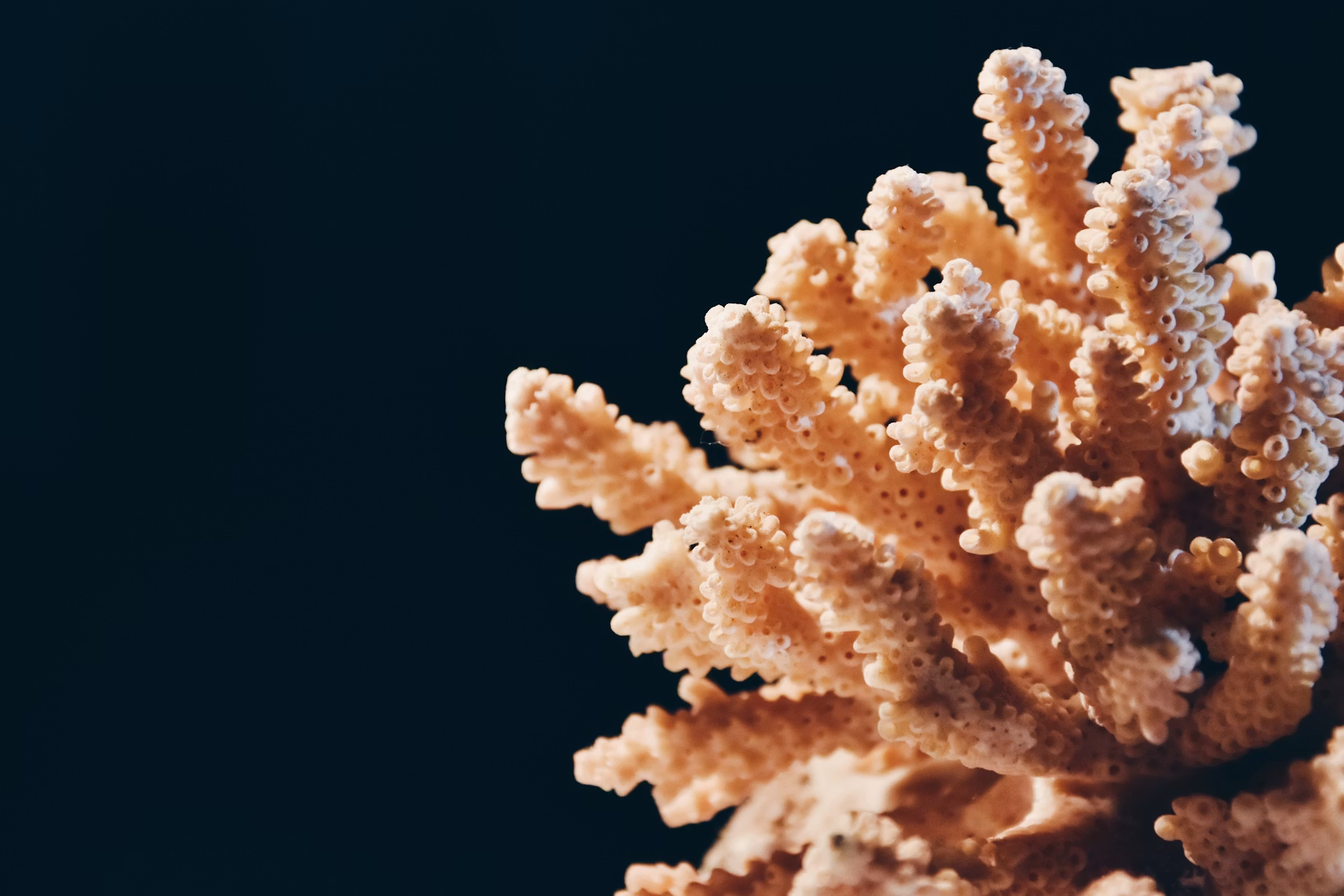
Mauritius' coral reefs have been under sustained siege for decades. Since 1998, the island has recorded major bleaching events – five recorded by 2021 – and more are unfortunately predicted. A peer-reviewed study published in the Journal of Marine Science and Engineering in June 2025, led by Dr. Nadeem Nazurally of the University of Mauritius, in collaboration with researchers from the Universities of Melbourne and Western Australia, offers some good news.
The study, which monitored four coral species across two contrasting Mauritian reef sites (Flic-en-Flac and Pointe aux Feuilles) over three years, found survival rates exceeding 88% across all conditions, and over 98% at the more pristine eastern site. These results compare favourably with coral farming programmes worldwide.
The research isn't about ‘heat-resistant’ corals, as an international outlet suggested, but it does offer genuine hope. Nazurally and his team compared two nursery types: floating mid-water structures and bottom-fixed table nurseries. Their central finding is that there’s no 'one size fits all' approach when it comes to designing the right coral nursery: one has to design according to each reef’s specific environmental pressures. In high-sedimentation, tourist-heavy areas like Flic-en-Flac, floating nurseries significantly outperform their counterparts. In calmer, more biodiverse sites like Pointe aux Feuilles, seabed table nurseries produce better coral growth. This framework – calibrated to local conditions, and designed by local institutions – is a leap forward in protecting Mauritian biodiversity.
Diaspora spotlight
Vikash Dhorasoo learned early on that neither legal immigration nor French birth would make him French in the eyes of many racists. The son of Mauritian immigrants, he grew up in Caucriauville, the multicultural working-class district of Le Havre where his father worked the docks and his mother the school kitchens. Navigating racism would define his career, one spent at the highest level of football, in a game that kept finding reasons to leave him on the bench in the most important matches of his life.
Dhorasoo was celebrated as the finest dribbler in the club's history, and he won Ligue 1 in 2003 and 2004. At AC Milan he reached the 2005 Champions League final – only to watch all of that game from the bench, collecting a runner-up's medal without playing a minute. A year later, he was back on the bench again for no valid reason during the World Cup, despite having played every one of France's qualifiers; he watched his teammates play without him during the entire knockout run and during the actual final too (the one that infamously ended with Zidane's headbutt). He spent the tournament surreptitiously filming his own exclusion on a Super 8 camera, describing how the coach, Raymond Domenech, had spent two years teaching him to climb a mountain and then, on the day he could climb it, sent the neighbour's son instead.
That footage became Substitute, an unconventional, melancholy film that enraged Domenech and the federation. By the time it premiered, Dhorasoo's France career was already over and his club career was detonating. That autumn, after he criticised his PSG manager in the press and was accused of feigning injury, the club sacked him – making him the first player dismissed by a French club since the Professional Footballers' Charter was established in 1973 (for what it's worth: Domenech's tenure lasted until 2010. He was one of the most controversy-prone figures in modern French football, infamously using astrology to choose his team players in the Euro 2004 matches).
Dhorasoo didn’t disappear. He became a professional poker player, and six years ago stood in the 2020 Paris municipal elections. He turned his grief into a public cause, campaigning against racism and homophobia in football. Many Mauritians, perhaps unaware of his history, saw him accompany Emmanuel Macron in a state visit to the island in November 2025.
Culture corner
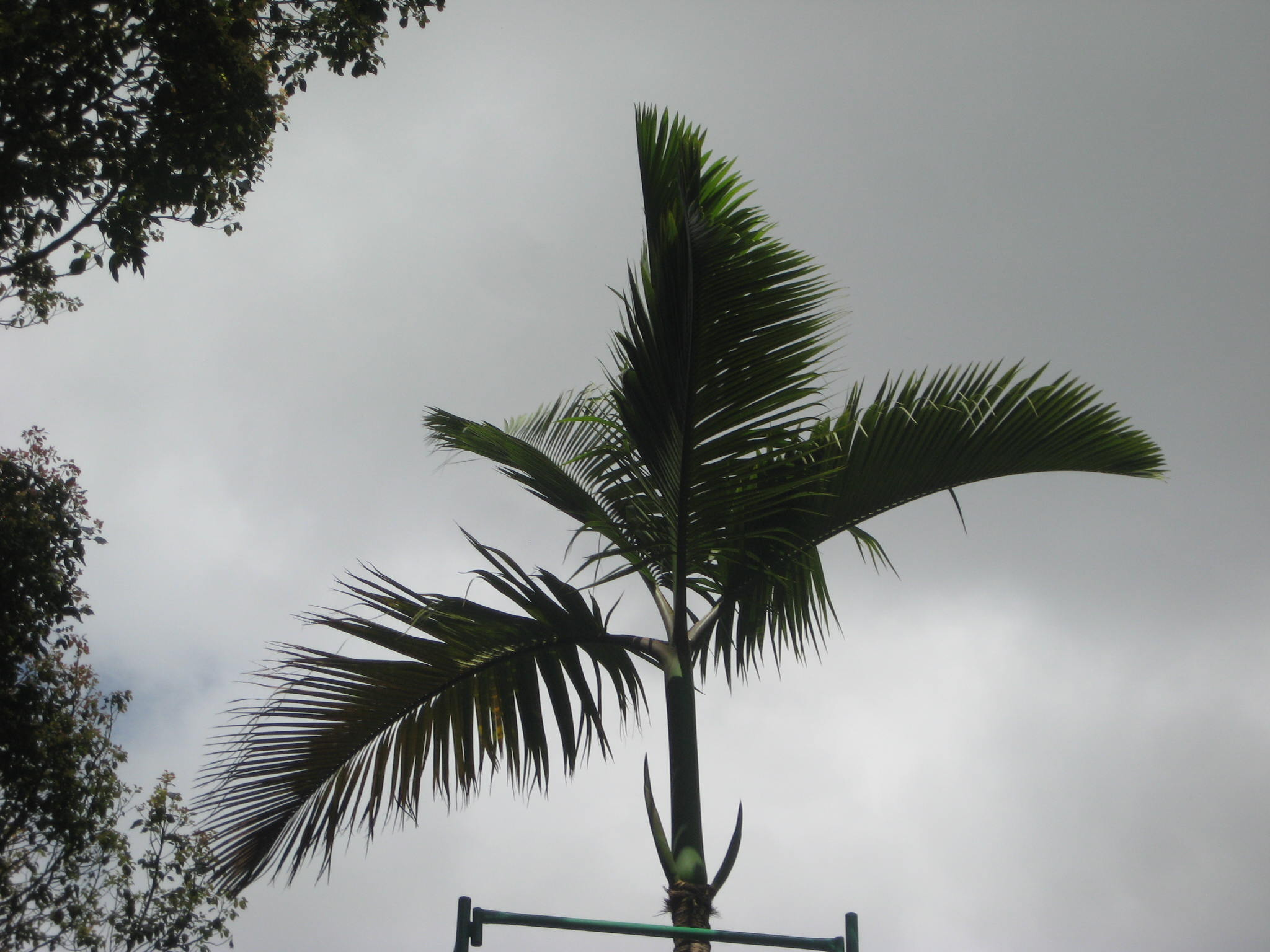
In the Curepipe Botanical Gardens, there lies the loneliest palm – perhaps plant – in existence. It is the last known specimen of Hyophorbe amaricaulis, a palm endemic to Mauritius, and it is the last of its kind on earth.
Alex has lived in Curepipe and its vicinity for much of her life, and wasn’t aware of the palm until she began research for a paper she was writing. It is slender, grey, tall and sadly quite missable, since it isn’t showy (beyond the fact that it is propped up and surrounded by a metal trellis). The palm produces its female and male flowers at different times during the flowering season, meaning no natural pollination can occur. Those seeds, in turn, have so far resisted every serious attempt at propagation: seedlings have been coaxed into existence at Kew Gardens (UK), only to die at the transplantation stage. Cuttings aren’t possible, too, since apparently even a slight cut could endanger the plant’s life.
University of Mauritius ecologist Vincent Florens has repeatedly issued urgent calls for international action, warning that the palm "could die anytime — for example through senescence, disease, or during the next cyclone that impacts the island." Florens notes that despite promising propagation breakthroughs abroad, Mauritius could devote more significant efforts towards averting the extinction, and has so far failed to capitalise on results achieved through international collaboration – a failure Florens believes is linked to a broader weakening of commitment to biodiversity conservation on the island.

Sirandann
Here’s another sirandann for you, taken from Arnaud Carpooran’s Proverb ek Sirandann Repiblik Moris.
– Ti bolom, gran sapo?
Hint: the answer’s in your garden, after the rain. See you in the next issue for the answer!
The Bridge playlist
Here's a classic: Cassiya's "Rev Nou Ancetres." Its lyrics catch the moment sega — its instruments, its voices, its dance — becomes a channel into history: a reckoning with the horror of slavery, with everything Creole ancestors were made to endure.
Kreol crossword puzzle

P.S. Know somebody who is missing Moris? Forward this publication to them, and spread the mauricianisme!