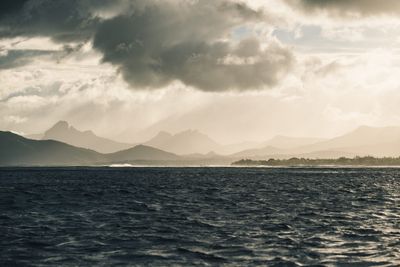
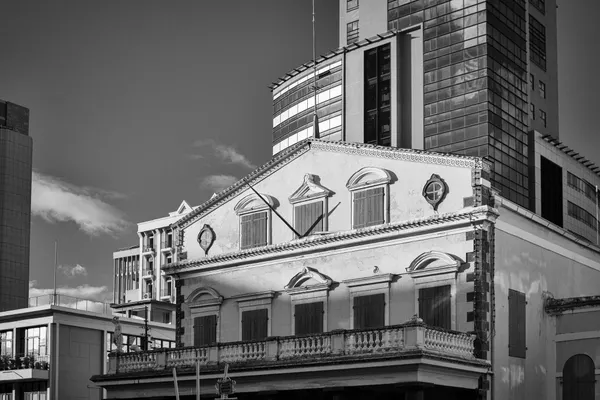
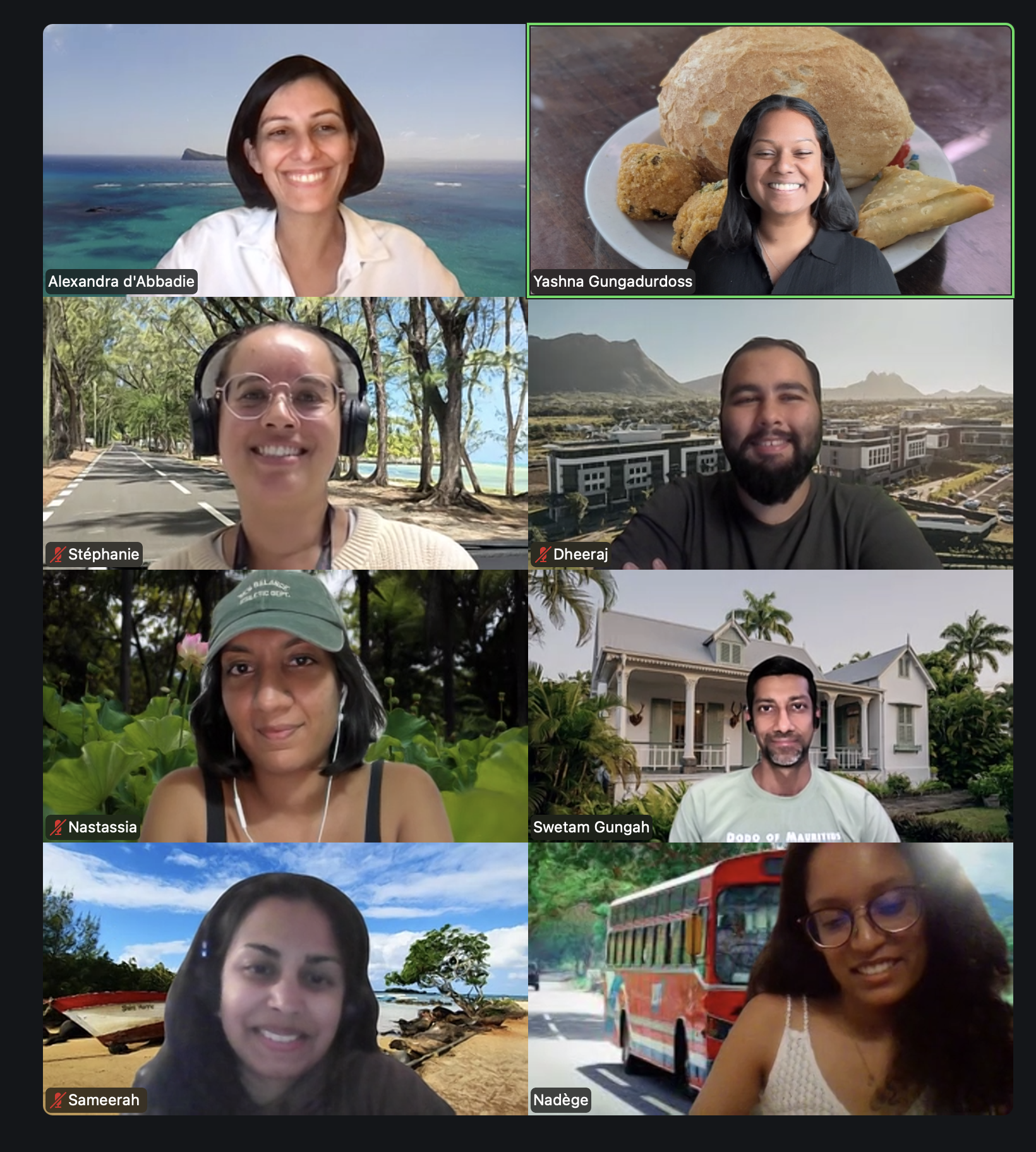
We hosted our very first online event for the Mauritian diaspora on April 30th: an intimate affair with eight participants, who gathered to discuss what ‘home’ means to them when they have more than one. We were surprised and moved by what our guests brought to the virtual table: stories of freedom but also stories of alienation, in both their home country and chosen country; analyses of how inextricably language is tied to home, and how firmly language defines Mauritian ethnic and class identity, even abroad.
We left the conversation feeling that we all carry multitudinous senses of home within ourselves, sometimes anchored within our bodies – and that this sense can’t ever be reduced, simplified or flattened by others seeking an easy answer as to who we are and where we come from.
With this in mind, here are some quotes from the event that we’d like to share:
– “I speak with an accent, so I get told ‘you’re not Mauritian’, but I do speak Kreol. I try.”
– “Different parts of me feel at home in different places. What parts need to feel ‘home’ the most, is what I’m thinking about.”
– “When I’m angry I speak Kreol. Different languages bring up different emotions.”

News digest
Arianne Navarre Marie of the MMM is Mauritius’ new Deputy Prime Minister. She is the first woman and the first Chagossian to hold the post; the short biography one can find of her on the Ministry of Gender Equality and Family Welfare (where she is still the Minister) is a fascinating read.
A burst Engen pipeline sent about 200-500 litres of fuel oil into the harbour on Friday. The Ministry of Environment and Engen have stated that the pipeline has been repaired and the oil spill has (mostly) been cleaned up, but we do wonder if further tests will be conducted in and around the area.
A reform on cannabis usage may finally be in the works: the National Agency for Drug Control is to submit a proposal for reform by next month. The proposal will examine, among other things, the case for decriminalising cannabis usage, the commercial possibilities of hemp, and access to medical cannabis.
Leptospirosis has reached alarming levels in Mauritius, with over 21 cases and six deaths recorded this year. Our 28% case fatality rate is extraordinarily high. In parliament, the Minister of Health explained this number as stemming from the fact that many Mauritians have comorbidities of some kind (over 20% of the population is diabetic), which worsens health outcomes; he also stated that we have one of the most severe strains of the bacteria here.
Ally Moortooza Boolaky, known as Ally Royals, was a locally famous influencer in 2023-2024. The 23-year-old spent his Wednesday night in jail, after being arrested by the FCC for alleged corruption. He was frequently photographed within the MSM’s inner circle back in 2024, producing content in the party’s interests, even going so far as making a whole (widely-ridiculed) video claiming that the Missie Moustass audio leaks were purely the work of Artificial Intelligence.

Mauritius on the Move
Last month, Mauritius made history in the world of economic governance: the kind of good, discreet news you may have missed. On 16 March, the island became the first country in Africa — and only the 32nd in the world — to adhere to the IMF's Special Data Dissemination Standard Plus (SDDS Plus), the most rigorous tier of the IMF's statistical transparency framework. The standard, which requires countries to publish detailed, timely and comprehensive macroeconomic and financial data, was designed in the aftermath of the global financial crisis to support market stability and informed policymaking. Bert Kroese, the IMF's Chief Statistician, noted that the achievement could reinforce Mauritius's credibility in international capital markets — and expressed hope that it would encourage other countries to follow suit.
It is perhaps no coincidence that this milestone arrives in the same season as Priscilla Thakoor's appointment at the helm of the Bank of Mauritius; you’ll remember her short profile from Bulletin #4. The SDDS Plus accession is brilliant for our island: it speaks directly to the international financial community, proving that Mauritius is not simply stabilising: it is raising the bar and repairing past damage, at a moment where we’d like to put our offshore tax haven image behind us.
Diaspora spotlight
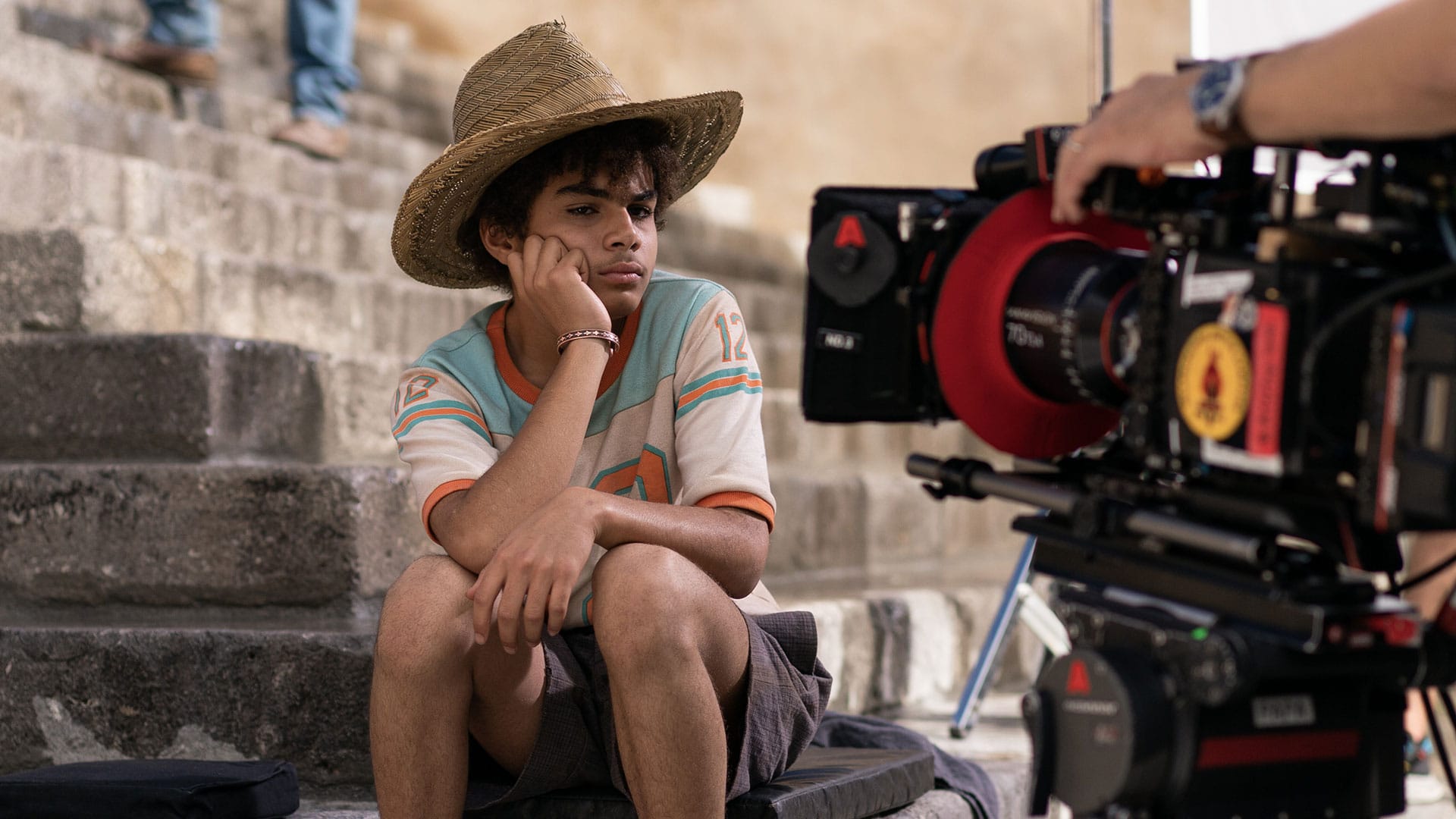
You’ve probably seen his face, though you may not know his name quite yet. In 2023, Ethann Isidore starred opposite Harrison Ford and Phoebe Waller-Bridge in Indiana Jones and the Dial of Destiny — the fifth and final instalment of one of cinema's most beloved franchises. He was 15 when he was cast, still in school when he filmed it, and had to juggle homework with tuk-tuk chases across Sicily. Ethann is of Franco-Mauritian-Brazilian descent, born outside Paris to a Mauritian mother who nurtures strong ties to Mauritius; Ethann’s grandparents live in Souillac, and the family visits the island often.
Ethann had been a lifelong Indiana Jones obsessive, who watched the films nearly every weekend with his parents. He learnt his lines on the eve of the audition and got the job. Ford and Waller-Bridge reportedly took to him immediately; by the end of the shoot, they had a special handshake and had given him an electric guitar and a handwritten letter. He has since appeared in The Walking Dead: Daryl Dixon, and is attached to further franchise work. Ethann is 19 years old, and we can’t wait to see how his career blossoms.
Culture corner
There should be a definitive book on the architecture of Mauritius beyond its colonial influences. What came during and after Independence is – in Alex’s view at least – considerably more compelling.Many of you will pull tired faces of disgust when thinking about the Emmanuel Anquetil building in Port Louis, covered in white streaks of pigeon poo, and the faded technicolor, rat-infested (and excrement-covered) Curepipe market. Those buildings, though, shouldn’t just be supra-cleaned: they should be preserved and treasured. Here’s why.
Port Louis and Curepipe contain some of the most architecturally significant — and most overlooked — buildings in the Indian Ocean. They are brutalist in aesthetic: raw concrete, monumental, unapologetic in their geometry. They are also works of tropical modernism, a movement that fused the modernist idiom with climate intelligence.
The two finest examples in Port Louis are both the work of the British practice Fry, Drew, Knight and Creamer. Jane Drew and Maxwell Fry were the pioneers of tropical modernism, having developed the style working in Ghana and India in the 1940s and 50s — their work in Chandigarh with Le Corbusier featured in the V&A's landmark 2024 exhibition on the movement, which Alex was lucky enough to visit.
What is less known is that they also designed two major public buildings in Mauritius: the Legislative Assembly and Government Centre (1978) and the Emmanuel Anquetil Building (1979), both built after independence. The Legislative Assembly, with its deep vertical concrete fins running the full height of the façade, is emblematic of the synthesis between brutalism (in its massing) and tropical modernism (in its engineering of shade and airflow). The Emmanuel Anquetil Building, home to the Civil Status Division among other ministries (and named after the trade unionist and Labour Party leader) was designed around a central courtyard to allow natural ventilation and daylight throughout: avant-garde for its time, and a case study in climate-responsive design that remains so relevant today.
Some of you will recall the previous government’s announcement that the Emmanuel Anquetil Building would be demolished to make way for a so-called ‘urban forest’ that never took shape. We’d like to highlight that the Mauritius Association of Architects firmly opposed the proposal, arguing that the building represents a unique and unrepeatable convergence of architectural, historical and environmental value. ‘Demolition is a waste of many things — a waste of energy, a waste of material, and a waste of history,’ they quoted Pritzker Prize-winning architect Anne Lacaton. The MAA's case was to renovate, adapt and reuse. We unfortunately still haven’t gotten to any of those stages yet.
Then there is Curepipe's central market, a building whose architect remained a mystery until sleuthing on social media identified them – or possibly identified them, at least – as Groupe 4 (Gustave Rey, Jean Ménagé, Alain Claudon), a practice based in Saint-Denis, Réunion, who worked extensively across the French Indian Ocean. The market is something else entirely: the concrete cylinders cut at eccentric angles across its roofline are closer to sculpture than engineering, a joyful brutalism that seems to answer the question of what happens when the style is freed from its more solemn, civic ambitions. It’s a pity that it isn’t better-maintained.
We know that these buildings are not universally beloved, but they’re a record of a momentous period of time: a period when a newly independent island nation chose an aesthetic to represent its ambitions.

If you’re based in France, don’t miss out on the Decolonial Film Festival running from the 11th to the 24th of May 2026.
The Siloy team has organised four screenings of Mauritian films to be screened at the Cinema L’Écran (14 passage de l'Aqueduc, 93200 Saint-Denis) as from 14.10pm, followed by a conversation with the brilliant Indian Ocean historian Marek Ahnee.
Learn more here.

Sirandann
An easy one for you today, once again taken from Arnaud Carpooran’s Proverb ek Sirandann Repiblik Moris:
– Dilo diboute? Or, what water stands up?Answer in the next Bulletin, as always.
The Bridge playlist
In this edition we’d like to highlight the incredible powerhouse of a voice that is Zulu Bavajee, icon of Mahebourg. There are a lot of his hit songs to choose from, but we thought it was worth sharing this live session that shows his versatility.
Kreol crossword puzzle

P.S. Know somebody who is missing Moris? Forward this publication to them, and spread the mauricianisme!