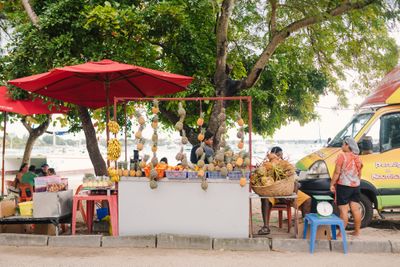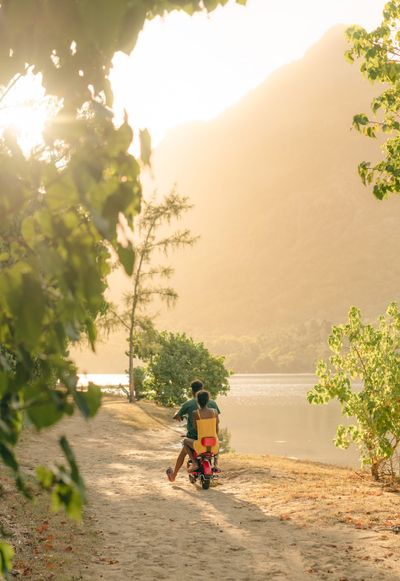

Bonzur tu dimunn! Mauritius, as you probably know, relies heavily on imported fossil fuels for its energy supply, with oil products comprising over 90% of its primary energy requirements. Activists, academics and researchers have been telling politicians – for years! – that our island should invest more in renewable energy, but projects have mostly been small, and few and far between. We hope that the global petrol crisis will kick-start serious investment in renewable energy, on the largest scale possible.

News digest
These were a particularly eventful two weeks in politics: Paul Berenger resigned as Deputy Prime Minister, and his future within the MMM – the party he founded, and the one he leads – is being called into question. In a two-hour press conference held on March 25th, he spoke out against the alleged corruption that had taken hold of the Prime Minister’s Office and other public bodies. No MMM member elected to Parliament has resigned except for his daughter, Joanna, and only a cluster of public nominees are following her lead. A considerable number of MMM members of each constituency have also voted to stay within the current ruling coalition. Time will tell whether Berenger will regain control over the MMM, or whether the stage is set for a new political party.
After many years of tense negotiations, you can finally use the Uber app in Mauritius, thanks to a partnership between Uber and IBL's Logidis. Only locally-authorised taxi drivers are able to register their services on the app, and over a hundred of them have applied to do so. As this article in l’express points out, though, something fundamental in the way that Mauritian taxi trips are organised and negotiated will indubitably change in the years to come: the app leaves no space for bargaining rates, for instance.
It’s quite clear that the government is doing its best to prevent widespread panic about the Iran war and the considerable ramifications to Mauritius’ energy supply. Cooking gas prices shot up by Rs 60 on Sunday (quite late, all things considered), and petrol prices haven’t increased yet. Officials seem hopeful about our petrol reserves, too, given a) the recently-signed Memorandum of Understanding between Mauritius and India, which will allow us to buy petrol directly from the Indian government, and b) the fact that a tanker full of petrol and diesel arrived in Mauritius on the 18th of March, and the next tanker is due to arrive by the end of this week. Nonetheless, the Central Electricity Board is maintaining a ‘yellow alert’, signalling that reserves are declining and that the public should reduce their energy usage – a reasonable move, given the fragility of the Board’s various engines.
It’s the end of an era: Cinema Star has closed its last venue on the island. The last film was screened yesterday in Grand Baie. Though the cinematic landscape seems to be dominated by MCiné at the moment, we’re hoping for a future where we will see the emergence of more independent art house venues and open-air initiatives like Ciné Sous Les Étoiles.
February 2026 was the driest month in 104 years, and the rainy season is drawing to a close. The government has announced that it plans to ‘secure’ water resources through a Marshall Plan, and aims to increase water stocks by 150,000 m³ through drilling, treatment plants – including a desalination station – and wastewater reuse.
A Mauritian man has been profiled in the Wall Street Journal. Armed with his metal detector, Zoël Manguillier has an extraordinary talent for finding lost wedding rings on the beach and in our lagoon. He’s the go-to man that hoteliers call to save the day.
The 2024-2025 Audit Report was released mid-March, and it is damning. Public sector debt has reached 86.5% of GDP, exceeding the statutory 80% ceiling; total financial liabilities of Rs 588.4 billion towered over total financial assets of Rs 252.4 billion. Institutional failure seems to lie across every sector you can think of, and there seems to be a persistent unwillingness to act on previous audit report recommendations, which have rung alarm bells for a good many years now. Though we’re glad to see democracy alive and thriving – criticising public institutions is fundamental if we are going to see positive change – it’s time that such change is effected, and for the public sector to be thoroughly reformed.
Here’s some news from our sister island: you have probably heard by now that Piton de La Fournaise has been erupting in stops and starts since mid-February. The footage is incredible to behold: streams of lava burning through forest until it tumbles into the sea, forming new land mass.

Diaspora spotlight
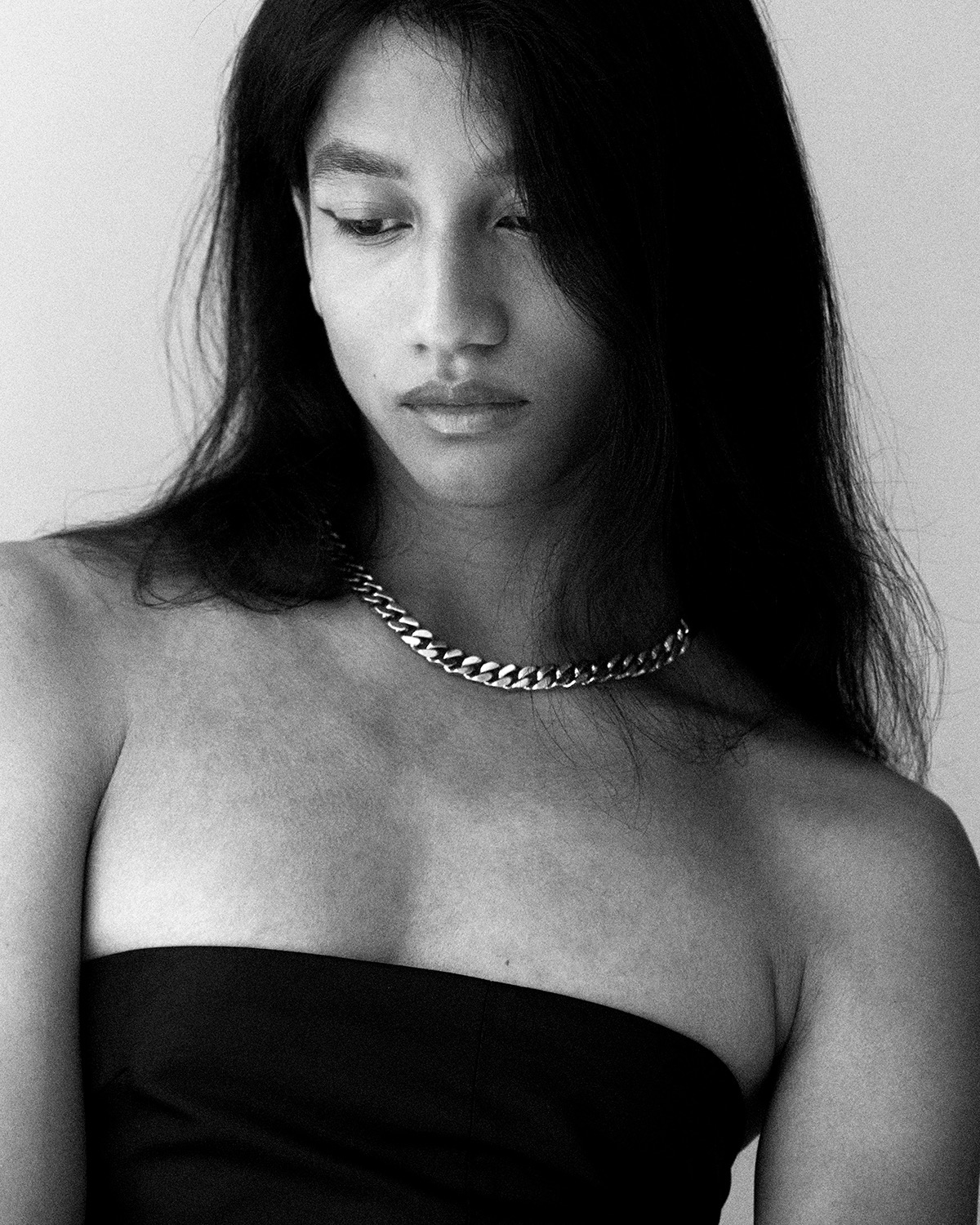
Vee Hatier is one of Mauritius’ most successful models, appearing in campaigns for the likes of Jean Paul Gaultier and Rui Zhou, and walking the runway for Jacquemus, AIGLE and SRVC. After an intense, stellar career, she is planning on moving back to Mauritius.
For many members of the Mauritian diaspora, education is a route out of their island and into the world at large. Instead of this happening in her late teens, though, Vee ended up emigrating at four years old due to the failures of the Mauritian educational system. ‘I remember vividly my pre-primary years in Mauritius; I had a teacher that used to hit me, pull my ears, pull at my hair. When I told my mother she came immediately to the school and told the teacher not to touch me again. He said, “I want to talk to your husband, not to you.”’ Vee’s parents, who had initially emigrated to France for a while when they were very young (and then resettled in Mauritius), decided to return to Europe to give their children a better life. But even there, school was still a traumatic experience: Vee faced harassment from students and sometimes teachers, and had to change institutions three times.
By the end of her secondary education, though, she started to dip into cinema and theatre. Vee ended up enrolling in a BA in Performing Arts, before ultimately deciding it was too theoretical a programme for her. By the time she came to her decision, though, she’d been told quite often that modelling was a career that she should seriously consider. ‘So one day I thought, why not just try. I went on Instagram, ‘liked’ a few posts from photographers, got some ‘likes’ back, and pretty much the next day I received offers from agencies.’ She tells us this as if it is just a completely ordinary occurrence; quickly, we understand that this woman is perfectly indifferent to her beauty and is largely unbothered by fame. Stories of how she was sweaty and tired when she finally managed to get to Jean-Paul Gaultier’s casting call, after running through the streets of Paris; of how she was sick with a virus on the day she landed Jacquemus’ show.
We were surprised to learn, too, just how much modelling is governed by social media: jobs are more accessible and visible to more people. Vee was booked by Jean Paul Gaultier after seeing a casting announcement by the brand posted on Instagram; through social media she also connected with a casting director in London, who then booked her for London Fashion Week. These were all major contracts: for Jean Paul Gaultier, in particular, she was one of 11 models in the designer’s 2022 Cyber campaign, a visual feast of skin-tight, laser-cut, electric pieces worn by some of the most charismatic models working today.
But grind (and sheer luck) doesn’t erase the discrimination pervasive in the industry. ‘There were a few difficult moments with certain photographers, fashion directors. I remember being in a meeting with a modelling agency that was considering signing me: they took one look at my gender identity and said, ‘I’m sorry, we can’t sign you, we already have [trans model] Hunter Schafer. Who, as you recall, is a white, blond, blue-eyed woman.’ The agency had effectively filled a quota; it didn’t matter that both women had nothing in common. There was also that age-old pressure to stay thin. ‘And so, one day I woke up and I told myself that this is absolutely not what I want anymore. It was beautiful for a point in time. I haven’t stopped modelling completely though – actually, you know what, I have to call my clients and tell them I’m quitting.’
Vee travels to Mauritius every year, sometimes staying for a few months at a time. In 2024, she began to think seriously about what life back on the island would be like for her. She wants to be near her parents, who returned to Mauritius full-time six years ago. ‘We grew up in this very healthy environment with my parents and grandparents. They were against corporal punishment, any punishment actually. They valued dialogue. They didn’t want to reproduce what previous generations had inflicted on them. I am very lucky, they’ve always been safe. They have strong socialist values, a strong sense of history and of Mauritian culture. They’re steeped in Mauritian music, in sega.’
She says she wants to find her way back to the land of her ancestors. Sit in her grandparents’ house for a while. ‘As a child of immigration you have this homesickness. I don’t know how to explain it, but I’ve always felt that I lacked the full ability to make a home for myself in Paris. That I had to go back. This desire to go back to my homeland, it’s at my core. I remember how, even when I was a child and would go back to the island on holiday, it always felt like a shock to return to Europe. It was so hard, too, not to be able to be home during crucial times in my family’s life; there’s a sense of powerlessness watching family events live-streamed, knowing that you can’t be there in person.” As she spoke, we remembered, in particular, all the online funerals we’d watched – gut-wrenching, unsettling experiences. We completely understood where she was coming from.
She values her mental health, and believes she’ll find some peace in Mauritius. ‘The grass isn’t greener in Paris. I’ve lived with racism and transphobia my whole life. It’s easier to transition in Europe, to have access to surgery, but immigrating to Europe does not protect you from the violence of harassment and abuse. And I’d rather be home, with community, than alone in a country that is growing more right-wing by the month.’
And home is moving away from its bitterly homophobic, transphobic past. It is particularly poignant, and wonderful, that the Lycée Labourdonnais featured Vee as one of their ‘Toutes Puissantes’ ambassadors in November 2025. Her return to Mauritius could announce a more pronounced career in advocacy: on top of creating trans awareness through her own social media channels, Vee was interviewed by OUT Moris last year in a beautiful video that went viral on Facebook. She says the words she lives by are ‘Just do what you want. Listen only to your heart. Be bold, fearlessly. You’re not alone.’ We can’t wait to see where her heart takes her next.

Many of you have told us that you want to engage more deeply with policy discourse in Mauritius, and in this edition, we wanted to spotlight an experiment that speaks directly to your wishes. PolicyDraft.org is a platform created by Hans Balgobin, a Mauritian diaspora member, to rethink how complex ideas and public policy can be built collectively. Instead of comment threads, PolicyDraft uses structured reasoning tools and AI-assisted synthesis to turn scattered ideas into coherent policy thinking and meaningful collaboration. The platform is now open to beta testers on Android and iOS, and represents a great opportunity for curious thinkers, researchers, and policy-minded Mauritians – at home and abroad – to explore a new way of contributing to policy conversations, and to help shape the platform as it evolves. Sign up here.

Bridge Playlist
In this week’s edition we’ve chosen Anne Ga’s feel-good song Sakinoule. We love how it’s a fun celebration of Mauritian multiculturalism, of different, plural identities.
Kreol crossword puzzle

P.S.1: Did you guess the answer to Bulletin #2’s sirandann? Here’s a little reminder: Mo ena enn barik ki ena de kalite lapintir, zame lapintir la melanze? Answer: dizef! (an egg)
P.S.2: Know somebody who is missing Moris? Forward this publication to them, and spread the Mauricianisme!